
Why WordPress Web Design is Failing Bristol Businesses in 2026
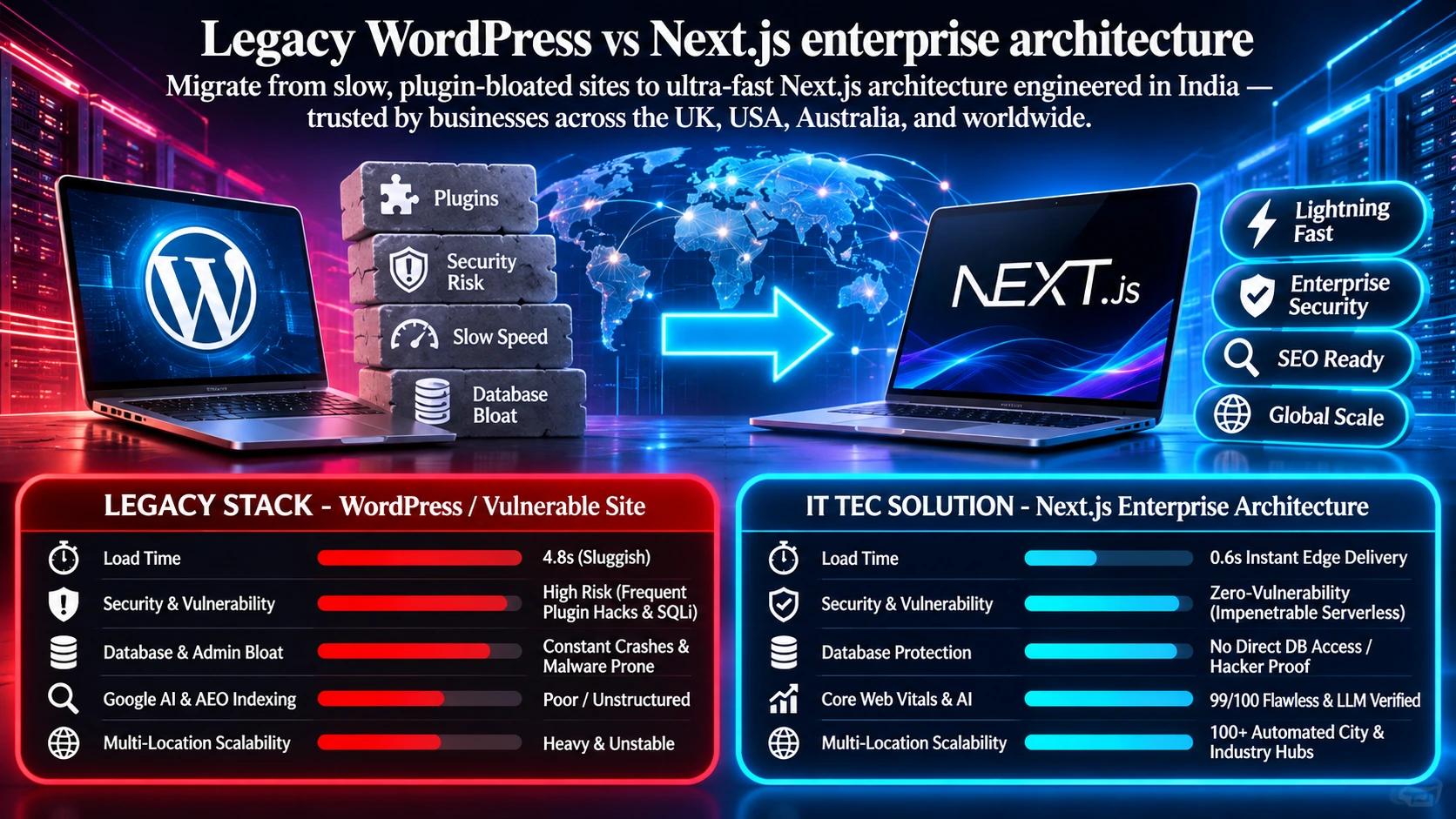
Last month, while auditing a hospitality and B2B portfolio based around Clifton (BS8) and Harbourside (BS1), we encountered a familiar technical catastrophe: despite paying hefty monthly retainer fees for local SEO services in Bristol, their primary lead-generation portal was taking 4.8 seconds to render on standard 4G mobile devices. The site had accumulated thirty-seven plugins, an unmanageable MySQL options table, and recurring vulnerability warnings from their UK hosting provider. When potential clients searched for commercial services, generative answer engines and Google AI Overviews consistently cited competitors with zero legacy bloat. This post-mortem explains the engineering reality of 2026: traditional monolithic WordPress web redesigns can no longer sustain modern search engine optimisation in Bristol, and why agile Next.js architectures are essential to capture top-tier organic demand.
Looking to dominate local rankings? Explore our specialized Bristol SEO Services and Responsive Web Design in Bristol.
1. The Monolithic Runtime Trap: How MySQL & PHP Bloat Destroys Core Web Vitals
Every single interaction on a legacy WordPress deployment forces the server through an inefficient execution loop. When a user in Bedminster or Southmead requests a landing page, the server must spin up the PHP runtime, execute nested theme hooks, process conflicting page-builder scripts, and run multiple blocking database queries before dispatching the initial byte of HTML.
In our technical SEO audit checklist across local service firms in Horfield, Filwood, and Totterdown, this sequential bottleneck repeatedly generates a Time to First Byte (TTFB) higher than 1,200ms. Google's algorithmic ranking systems immediately downgrade pages that fail responsive web design benchmarks due to dynamic server latency and high Cumulative Layout Shift (CLS).
At IT TEC SOLUTION, we engineer websites using compiled Next.js edge architecture. Rather than building the DOM dynamically on fragile servers during runtime, our systems pre-render immutable static pages and deploy them across distributed content delivery networks. This guarantees sub-600ms edge delivery, ensuring that commercial prospects encounter zero rendering delay.
- Relational database lookups introduce severe TTFB delays on regional UK networks
- Plugin layer dependencies inflate DOM size and cause critical Core Web Vitals failures
- Next.js pre-compilation delivers instantaneous rendering with verified 99/100 performance scores
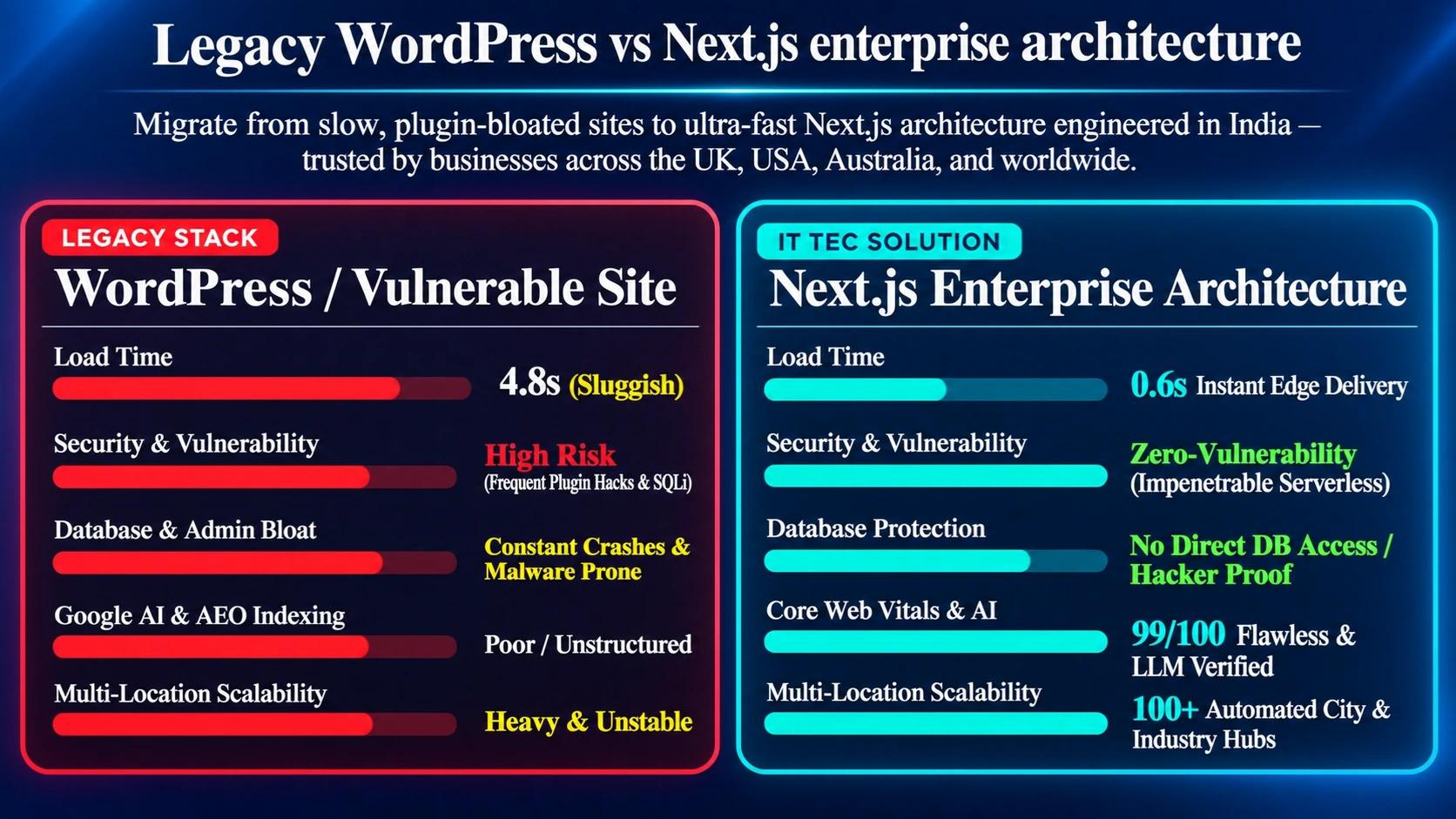
Figure 1: Architectural audit comparing dynamic runtime WordPress bottlenecks with pre-compiled Next.js edge delivery.
2. The Enterprise Security Matrix: Eliminating Database Vulnerabilities & Plugin Exploits
United Kingdom cybersecurity reports confirm that the vast majority of small and mid-market web breaches trace directly to abandoned WordPress plugins, unauthenticated REST API endpoints, and SQL injection flaws. For commercial operations across Keynsham, Cotham, and Bradley Stoke, dealing with malicious redirects and database spam turns into an expensive technical liability.
Monolithic architectures place administrative login directories and live database ports directly in line with automated scraping bots. When client forms get spammed or sensitive client inquiries are exposed, enterprise brand trust suffers immediate damage that no traditional backlink campaign can remediate.
Headless Next.js development completely redefines digital resilience. By decoupling front-end presentation from backend databases, visitors interact exclusively with pre-built static assets. There are no executable PHP engines, no open database connections exposed to public traffic, and no vulnerable plugins for automated bots to breach.
- Traditional CMS sites leave administrative panels vulnerable to automated credential attacks
- Headless architectures offer complete zero-vulnerability security with no direct database access
- Serverless forms and isolated API routes guarantee enterprise compliance for UK B2B operations
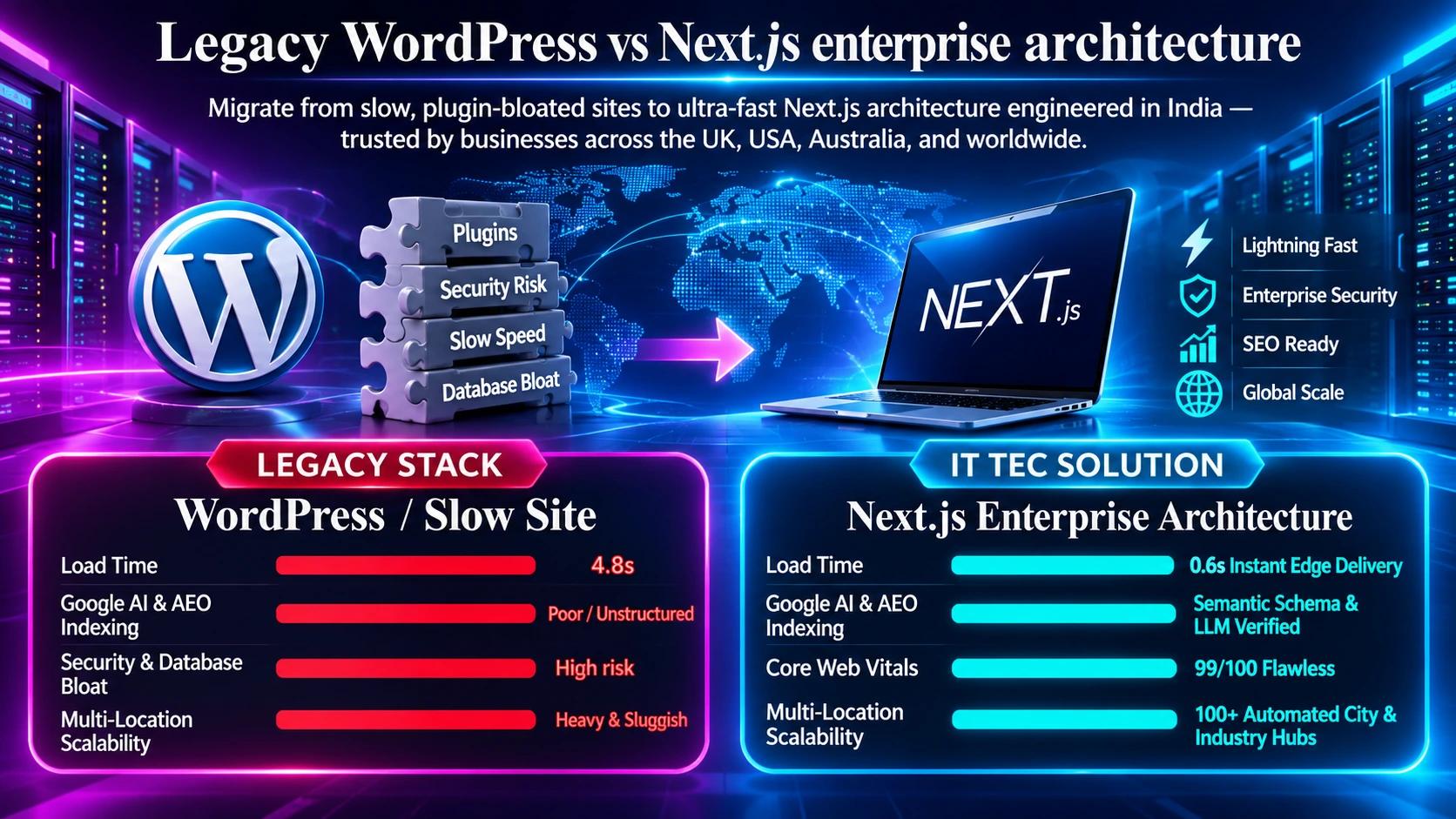
Figure 2: Threat matrix analysis: Legacy CMS vulnerability vectors vs. secure serverless edge protocols.
3. Capturing Google AI Overviews and Perplexity Citations Across Bristol Commercial Hubs
Search behavior across the UK has pivoted toward Answer Engine Optimization (AEO) and conversational discovery. Potential enterprise buyers in Fishponds, Eastville, and Chipping Sodbury no longer click past paginated search results; they rely on AI Overviews, Perplexity AI, and ChatGPT Search to identify verified local specialists.
Generative engines evaluate factual information density and structured JSON-LD entity triples. When crawler bots encounter heavy legacy themes loaded with visual builders, they frequently hit strict latency timeouts and skip unindexed resources. If your website cannot deliver factual clarity within clean semantic HTML, it is discarded from LLM knowledge retrieval graphs.
By integrating comprehensive LocalBusiness and ProfessionalService schema directly into Next.js components, we map your business entity to specific commercial corridors across Bristol. This semantic approach enables regional enterprises to dominate high-intent voice, conversational, and traditional search results without relying on local map-pack shortcuts.
- Semantic schema structures feed verified entity triples directly into generative answer engines
- Sub-second load speeds prevent AI search crawlers from timing out during live content extraction
- Engineered for multi-hub local scaling across Bristol, Exeter, and broader UK markets
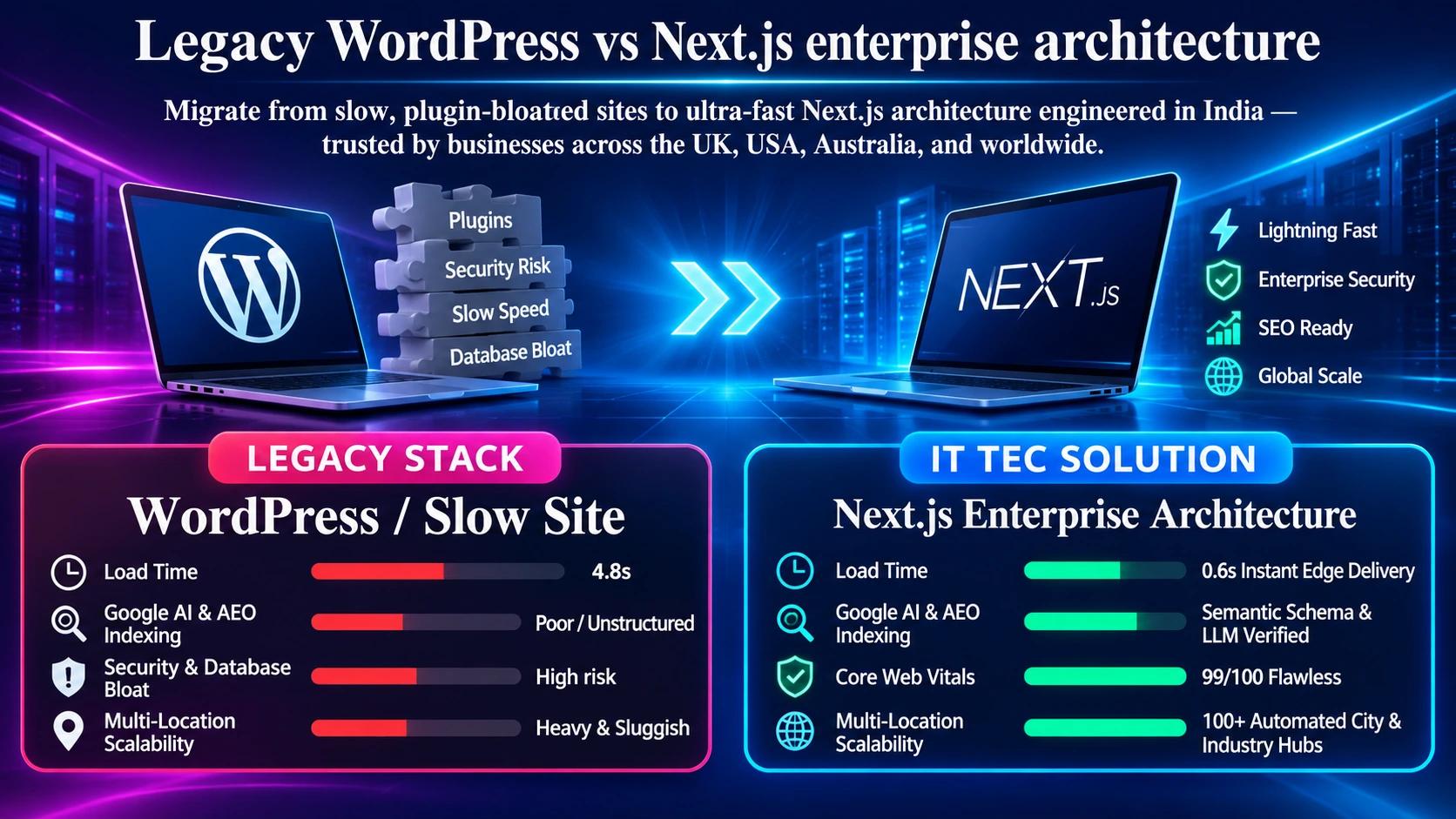
Figure 3: Localized Answer Engine Optimization (AEO) entity grid across Bristol commercial zones.
| Legacy WordPress Stack | IT TEC SOLUTION Next.js Enterprise |
|---|---|
| Average page load time: 4.8s (Sluggish) | Sub-second 0.6s instant edge delivery |
| High risk of frequent plugin hacks and SQLi | Zero-vulnerability impenetrable serverless architecture |
| Constant database crashes and malware susceptibility | No direct database exposure; immutable edge assets |
| Unstructured code failing Google Core Web Vitals | 99/100 verified Core Web Vitals and semantic schema |
| Heavy, unstable maintenance requirements | Automated multi-hub scaling across Bristol and the UK |
Figure 4: Commercial Lead Attribution & Compounding Revenue Model for Bristol Businesses.
Bristol Core Services & Technical Architecture Hub
Explore our core revenue and optimization pathways engineered for businesses across Bristol (including Eastville, Southmead, Bedminster, and Horfield):
Related Search Engineering Guides
Frequently Asked Questions About Search Architecture
Why is legacy WordPress failing to rank for competitive Bristol queries?
Monolithic WordPress sites suffer from high server latency, bloated theme scripts, and poor Core Web Vitals, which Google algorithms downgrade in favor of sub-second, cleanly coded web applications.
How does migrating from WordPress to Next.js improve site security?
Next.js pre-compiles code into static edge assets, eliminating direct database access, PHP server execution, and vulnerable third-party plugins that hackers routinely exploit.
Can an enterprise build Next.js websites without ongoing maintenance fees?
Yes. Because serverless Next.js applications do not require constant plugin patching, database backups, or server security sweeps, ongoing maintenance overhead is substantially reduced.
Does page rendering speed impact conversion rates for UK service businesses?
Directly. Every 100ms improvement in load time correlates with measurable conversion gains; sub-second delivery ensures high-intent buyers interact without friction or drop-off.
How quickly can a Next.js architecture be indexed in Google AI Overviews?
Clean semantic markup and structured schema allow search engine crawlers to extract and validate entity information quickly, often establishing citations within 7 to 14 days of live deployment.
Arghya Mitra
Lead Technical Architect & SEO DirectorFounder and Senior Architect at IT TEC SOLUTION. With extensive full-stack Next.js engineering and search architecture experience, he designs sub-second systems and local revenue engines for high-growth UK businesses.
Ready to Win Real High-Intent Leads in Bristol?
Work directly with our senior engineering team — no middleman markups, no account managers. Let's build your sub-second Next.js website and dominate modern search engines.