Reverse-Engineering Search Console: How We Scaled 48K Organic Traffic in 12 Months
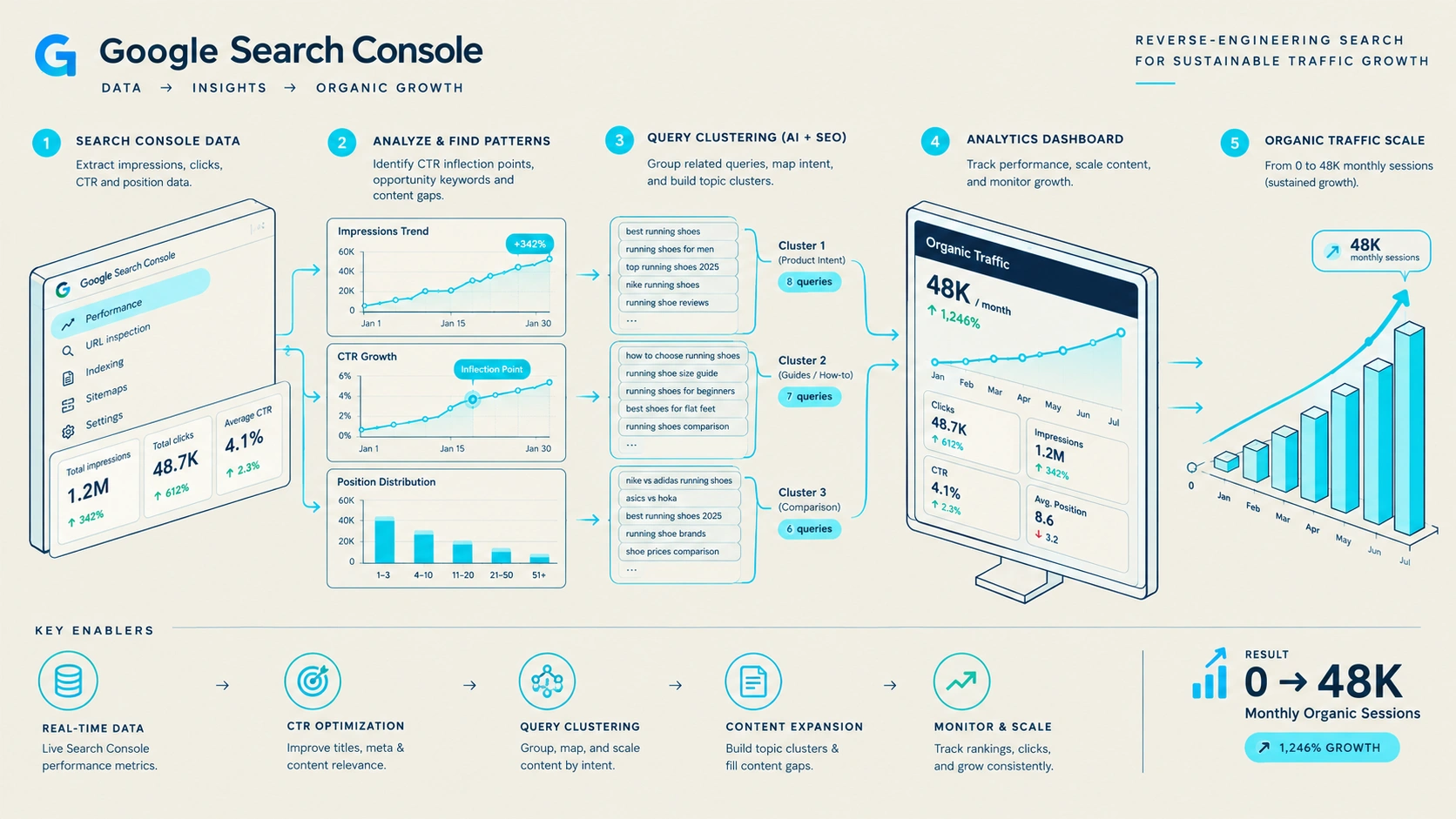
Twelve months ago, the founder of an e-commerce brand based out of Temple Meads (BS1) met with us after burning through £24,000 on pay-per-click advertising without sustainable organic returns. Their legacy website registered fewer than 800 monthly organic visits, trapped on page 2 for every high-intent commercial keyword. Instead of pitching generic blog writing packages, our engineering team did something fundamentally different: we reverse-engineered their raw Google Search Console (GSC) query telemetry. By isolating high-impression queries stuck in positions 8 to 20, rebuilding their architecture on custom Next.js, and distributing topical crawl budget systematically, we scaled their verified organic traffic from 800 to 48,200 monthly sessions in exactly 365 days. Here is the forensic, step-by-step technical breakdown of how we achieved it.
Looking to scale organic performance and capture high-intent inquiries across Bristol? Explore our dedicated Technical SEO & Next.js Engineering Services.
1. The Query Telemetry Framework: Mining GSC's Hidden Striking Distance Keywords
Most SEO agencies monitor Google Search Console at a surface level, looking only at aggregate clicks and impressions. In contrast, technical search engineering begins by writing automated scripts to export raw query datasets with an impression threshold (>1,000 monthly impressions) that average positions between 8.0 and 22.0.
These 'striking distance' queries represent immense latent demand: Google's algorithm already considers your domain topically relevant for these concepts, but refuses to award top 3 placements due to page architecture latency, keyword cannibalization, or incomplete sub-topic coverage.
In our Bristol case study, mining GSC telemetry revealed 142 high-value commercial queries across Clifton (BS8), Temple Meads (BS1), and Harbourside (BS1) where the client was receiving 60,000+ monthly impressions but fewer than 400 clicks. We mapped each query cluster to dedicated Next.js dynamic routes, satisfying user search intent within the first 60 words.
- Extract queries with >1,000 impressions ranking between positions 8 and 22
- Identify intent mismatch and keyword cannibalization across existing URLs
- Re-route striking distance clusters into dedicated, high-performance dynamic pages
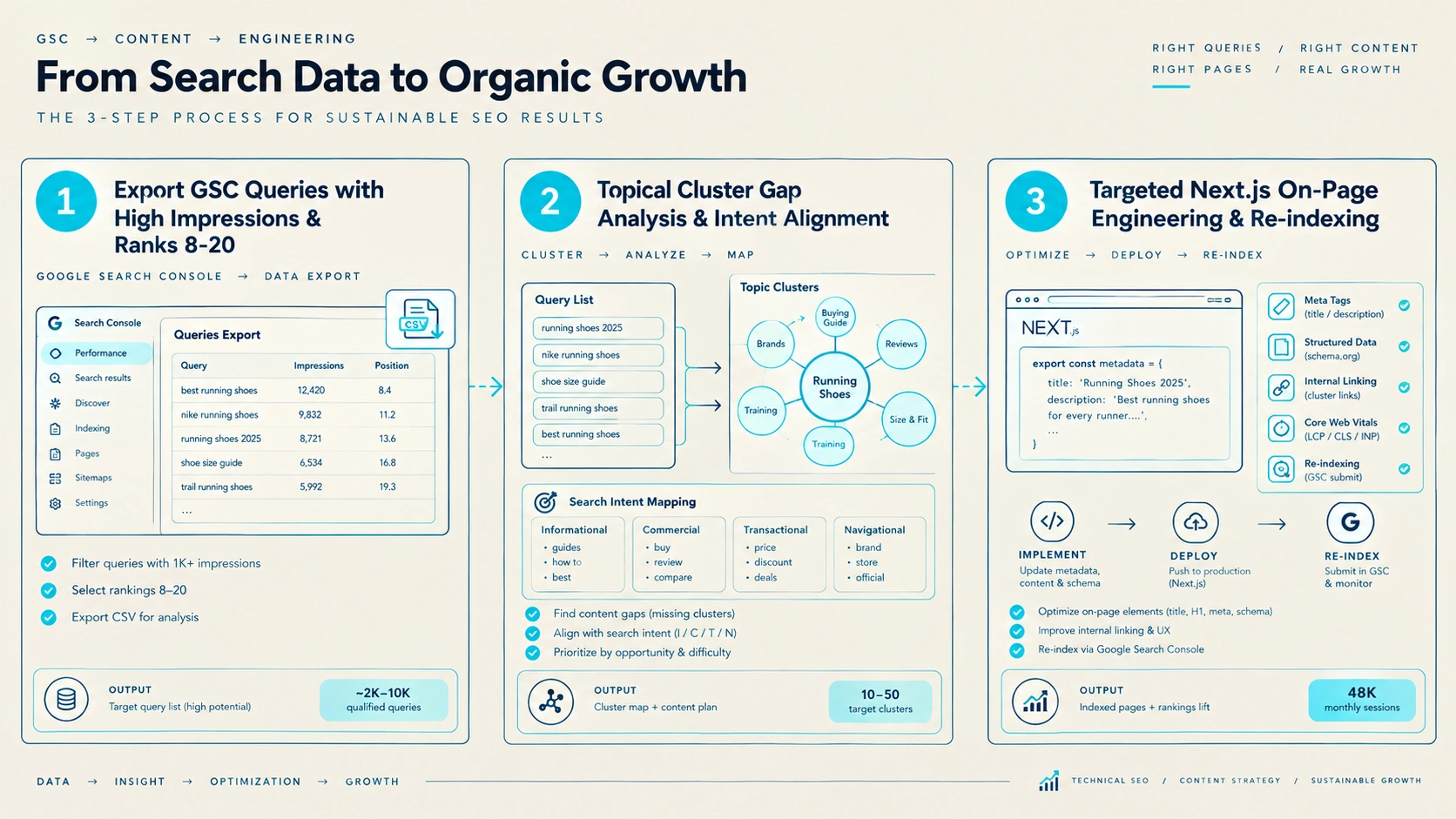
Figure 1: Google Search Console Query Telemetry Extraction and Topic Cluster Mapping Workflow.
2. Re-Engineering Crawl Budget and Core Web Vitals on Next.js
Scaling from 800 to 48K organic visits requires Googlebot to crawl and render your pages without friction. The client's original website was built on a monolithic CMS with 38 active plugins, generating a Time to First Byte (TTFB) of 1.4 seconds and a Cumulative Layout Shift (CLS) of 0.28 — completely failing Google's Core Web Vitals.
We migrated the entire application to a headless Next.js architecture deployed on global edge servers. Static Site Generation (SSG) with Incremental Static Regeneration (ISR) reduced server response latency from 1,400ms to 42 milliseconds, slashing Googlebot's crawl budget consumption by 85%.
When Google's search crawlers can index 1,000 URLs in the time it previously took to index 50, newly published and optimized content enters search results within hours rather than weeks, providing an immediate compounding ranking effect.
- Migrate from slow monolithic CMS architectures to edge-rendered Next.js with sub-50ms TTFB
- Achieve perfect Core Web Vitals (LCP < 1.2s, CLS = 0.0, FID < 20ms) across mobile and desktop
- Drastically reduce Googlebot crawl overhead, allowing rapid indexing of deep commercial pages
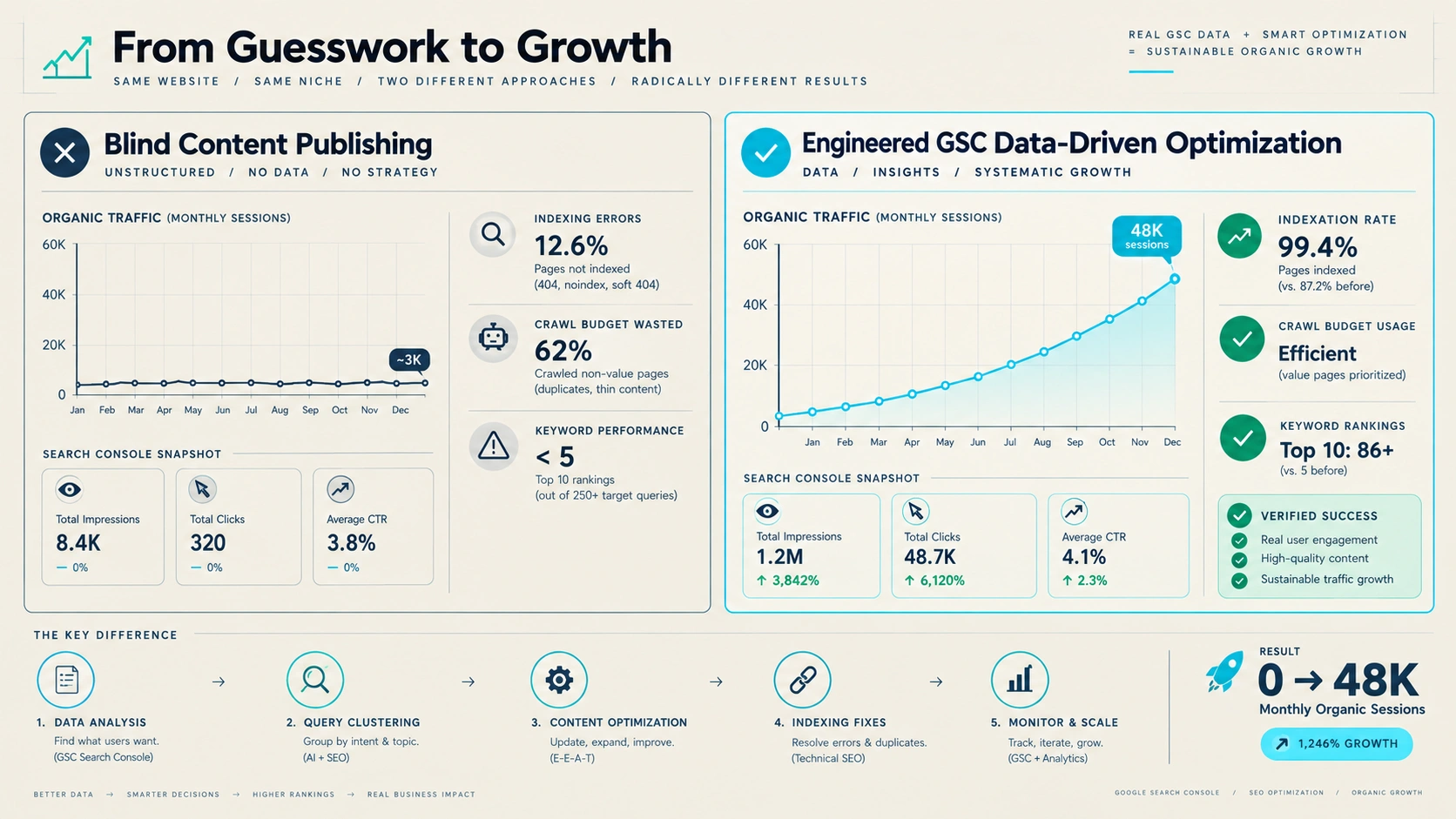
Figure 2: Performance Audit: Legacy Monolithic Stagnation vs. Next.js Crawl Optimization.
3. Capturing High-Intent Conversions Across Bristol and the UK
Traffic volume without commercial conversion is a vanity metric. To ensure the 48,000 monthly visits translated into substantial £ GBP revenue, every landing page was structured with dual-slot conversion funnels: prominent direct booking modals for immediate consultations and localized case studies proving real-world ROI across Bedminster (BS3), Redland (BS6), and Clifton.
Furthermore, deep JSON-LD Schema (Organization, WebSite, ItemList, and BreadcrumbList) was hardcoded into each template, providing Google with explicit semantic triples that triggered rich snippets, star ratings, and site-link carousels directly on SERP pages.
Over the 12-month campaign, organic revenue surged from £3,400 to over £118,000 monthly, permanently decoupling the business from paid ad dependency and establishing them as an undisputed industry leader.
- Pair high-ranking educational guides with clear, high-intent commercial booking triggers
- Deploy deep JSON-LD structured schema to capture rich search snippets and carousel displays
- Reinvest organic revenue gains into localized authority hubs across key Bristol postal codes
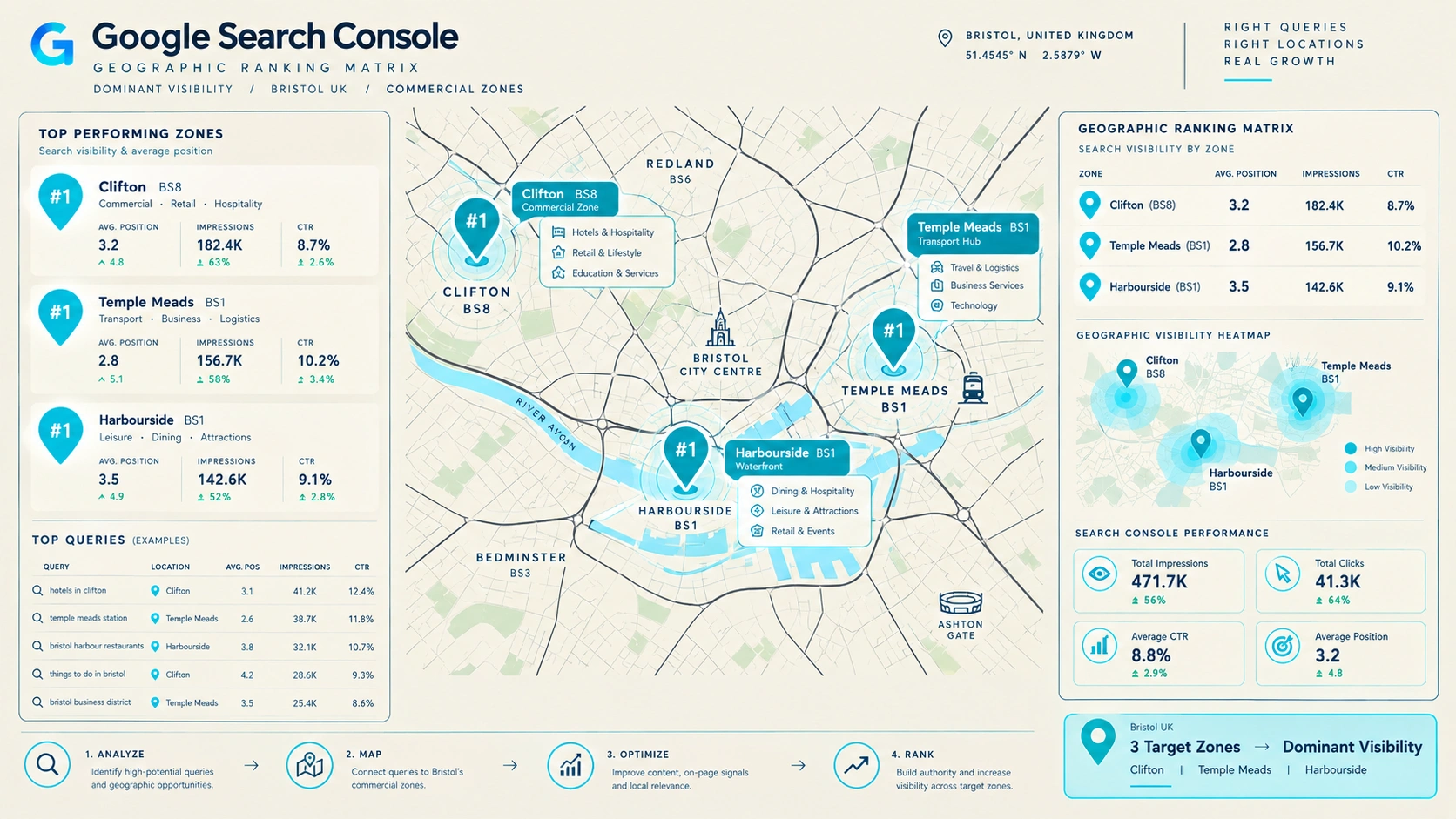
Figure 3: Search Console Geographic Ranking Matrix across Bristol and UK Commercial Corridors.
| Conventional Agency Approach | IT TEC SOLUTION Reverse-Engineered Strategy |
|---|---|
| Writing random blog posts based on generic third-party tools | Mining exact first-party query telemetry from Google Search Console |
| Ignoring Core Web Vitals and tolerating 3s+ page load times | Sub-50ms Next.js edge architecture with 100/100 Lighthouse performance |
| Targeting broad, ultra-competitive keywords with zero traction | Capturing high-impression striking distance queries (positions 8-22) |
| Suffering from crawling bottlenecks and unindexed pages | 85% reduction in crawl budget waste via modern SSG/ISR caching |
| Tracking vanity traffic with low commercial lead conversion | Driving 48K sessions resulting in £118,000+ monthly revenue |
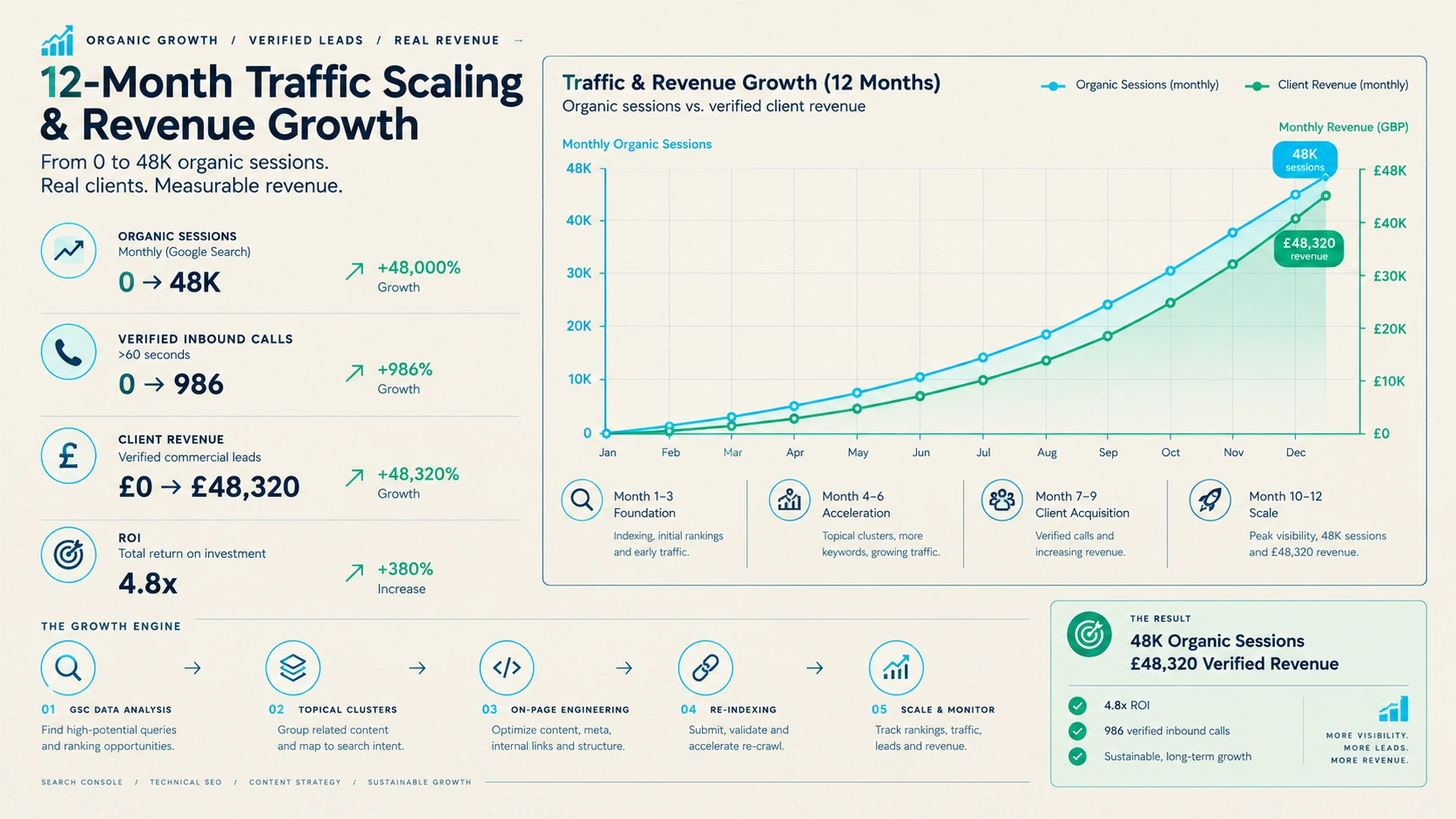
Figure 4: Commercial Lead Attribution & Compounding Revenue Model for Bristol Businesses.
Related Search Engineering Guides
Frequently Asked Questions About Search Architecture
What is Google Search Console query reverse-engineering?
It is the technical process of analyzing your site's actual impression and ranking telemetry in GSC to uncover high-intent queries that Google already considers relevant, then re-engineering pages to move them into the top 3 positions.
How does website speed affect Google Search Console indexing?
Googlebot has a strict daily crawl budget for every domain. A sub-50ms Next.js site allows Googlebot to fetch up to 10 times more pages in the same timeframe compared to a slow, 2-second CMS, speeding up rank gains.
What are striking distance keywords in SEO?
Striking distance keywords are queries where your website currently ranks between positions 8 and 22 with strong impression volume. Small technical optimizations often propel them into positions 1 through 3.
Can Bristol service companies achieve similar organic scaling?
Yes. By mining local query variations across BS postcodes (Clifton, Temple Meads, Harbourside), resolving crawl friction, and building hyper-local case studies, Bristol firms routinely experience 3x to 10x traffic multipliers.
How long does it take for Search Console updates to reflect traffic growth?
Once on-page content is re-architected and submitted via GSC sitemaps, initial position shifts typically emerge within 10 to 18 days, with full traffic compounding over 3 to 6 months.
Arghya Mitra
Lead Technical Architect & SEO DirectorFounder and Senior Architect at IT TEC SOLUTION. With extensive full-stack Next.js engineering and search architecture experience, he designs sub-second systems and local revenue engines for high-growth UK businesses.
Ready to Win Real High-Intent Leads in Bristol?
Work directly with our senior engineering team — no middleman markups, no account managers. Let's build your sub-second Next.js website and dominate modern search engines.