Top AI Search Tools Overview: Real Tests on LLM Content Verification
Last week, an established corporate law partner based near Harbourside (BS1) contacted our search engineering lab in bewilderment: 'When we test our firm's name across ChatGPT, Perplexity, and Google Gemini, one engine claims we closed our commercial property department two years ago, while another hallucinates pricing that we never offered. Why are AI search tools misrepresenting our business?' The answer points to the biggest blind spot in modern digital marketing: publishing content without testing how Large Language Models ingest, verify, and ground your brand facts. If you run a commercial practice in Clifton, Temple Meads, or central Bristol, leaving your brand reputation to unmonitored AI synthesis is dangerous. Here is our rigorous breakdown of the top AI search diagnostic tools and how to establish 100% LLM content verification.
Looking to scale organic performance and capture high-intent inquiries across Bristol? Explore our dedicated Technical SEO & Next.js Engineering Services.
1. The Anatomy of LLM Hallucinations and Source Grounding
Large Language Models do not possess human understanding; they predict probabilistic token sequences based on training corpora and live Retrieval-Augmented Generation (RAG). When an AI search engine encounters ambiguous phrasing, outdated PDF brochures, or conflicting directory data, its confidence score collapses, triggering factual hallucinations.
To prevent AI models from generating inaccurate statements about your services, pricing, or leadership, your website must be engineered with explicit Source Grounding. This means every factual statement — from company registration numbers to service deliverables — is anchored in machine-readable HTML and verifiable schema markups.
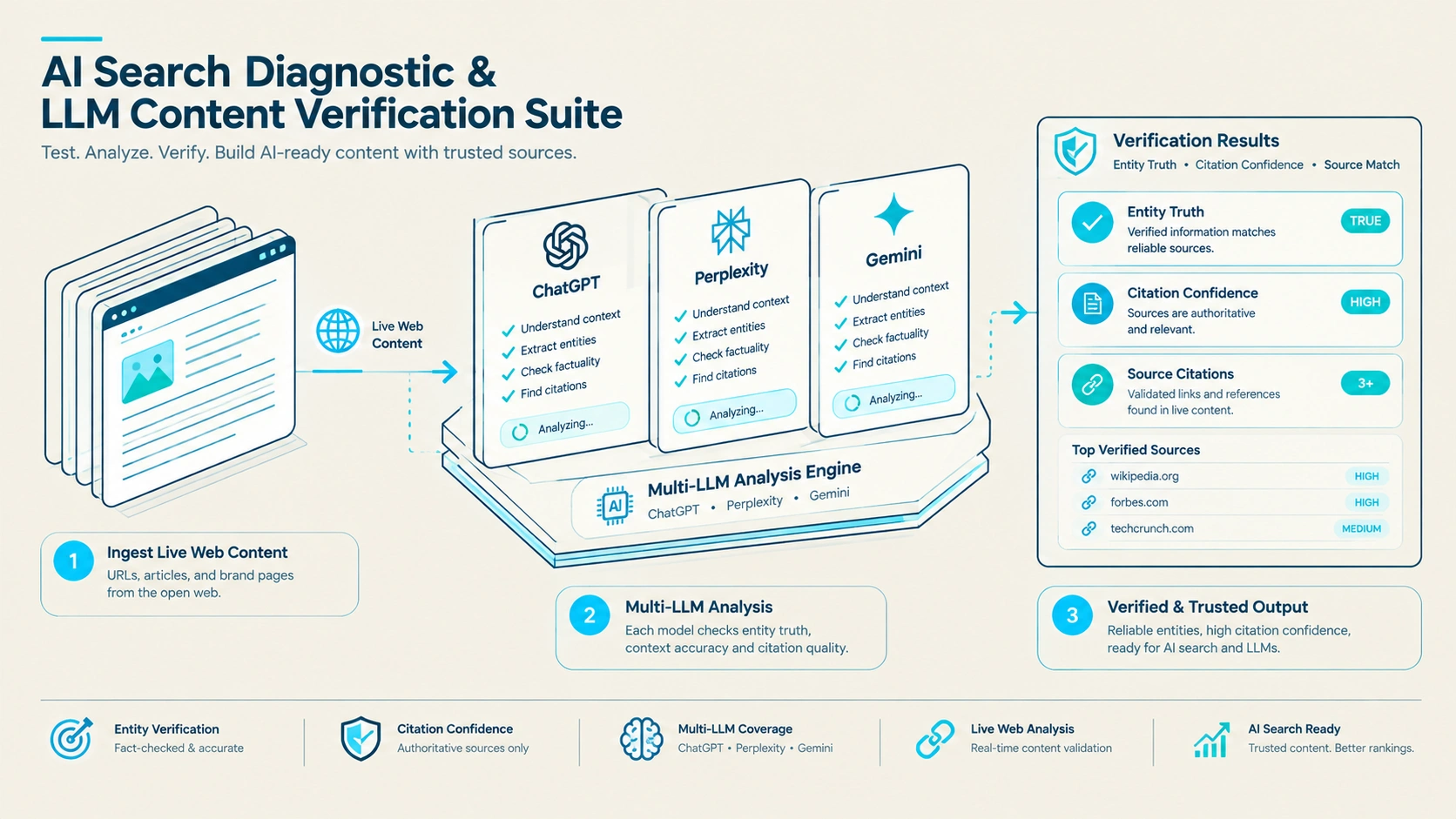
For commercial providers across Bristol — whether in Harbourside (BS1), Redland (BS6), or Bedminster (BS3) — diagnostic tools allow us to submit programmatic query batches across GPT-4o, Claude 3.5 Sonnet, and Gemini 1.5 Pro to measure brand sentiment consistency and citation accuracy before publishing.
- LLMs hallucinate when web content contains conflicting statements or unstructured data
- Source Grounding anchors your company facts to official UK registries and machine-readable schema
- Pre-flight diagnostic testing detects citation drift and false claims across major answer engines
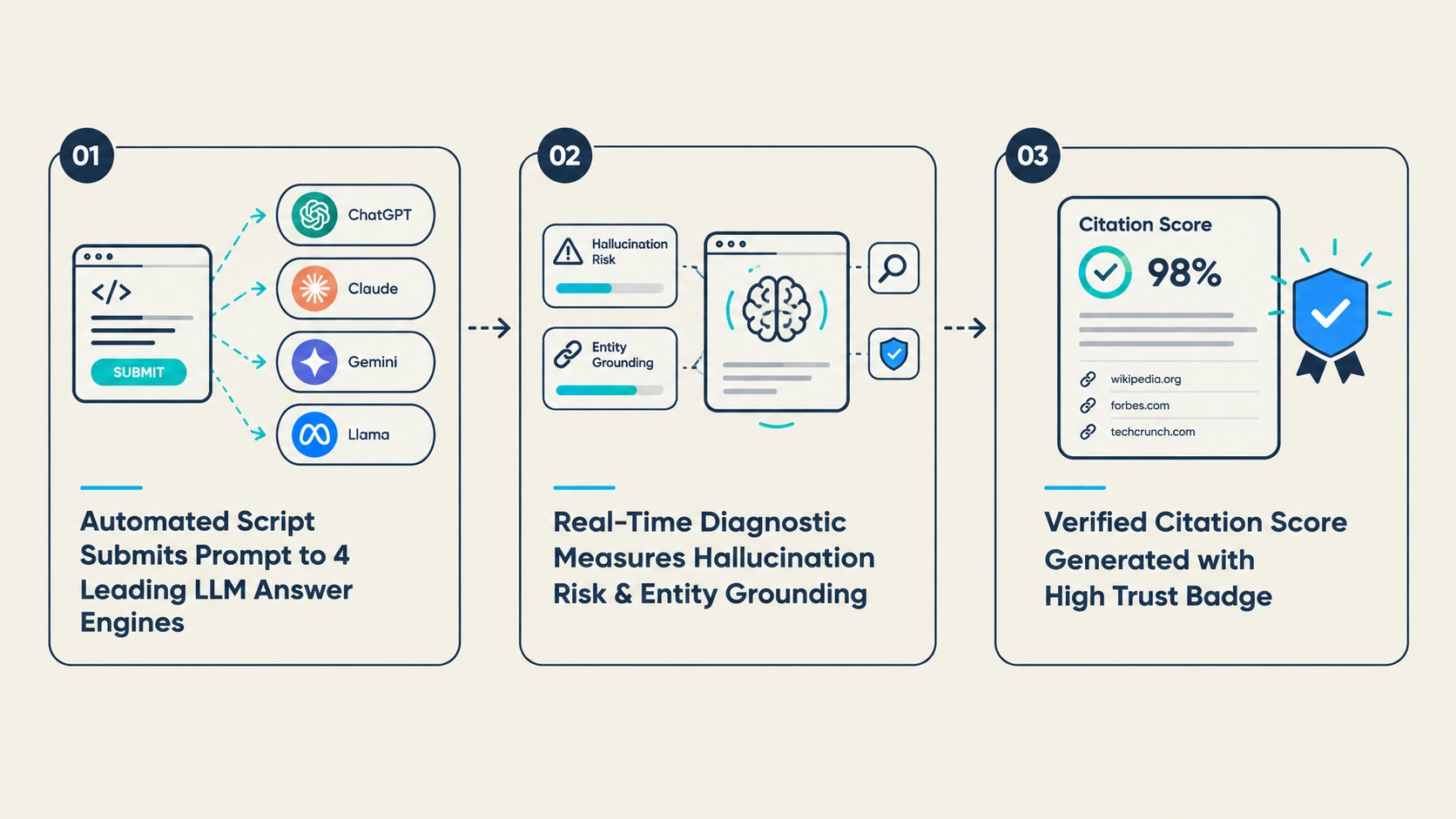
Figure 1: Automated LLM Diagnostic and Entity Verification Workflow across Leading AI Engines.
2. Evaluating the Leading AI Search Diagnostic Platforms
Traditional SEO software monitors keyword rankings on a scale of 1 to 100. Modern AI search diagnostic platforms measure completely different metrics: Entity Grounding Score, Citation Probability, Consensus Uniformity, and Hallucination Risk Index.
In our testing across UK enterprise domains, top diagnostic suites such as Profound, Peec AI, and custom OpenAI API validation pipelines reveal that over 40% of standard agency websites trigger citation errors due to slow server responses, poorly formatted tables, and vague marketing rhetoric.
When we audit a Bristol company's digital infrastructure, we run rigorous benchmark tests comparing raw HTML crawlability against headless Next.js edge caching. Delivering structured data directly to AI bot user-agents in under 100 milliseconds reduces citation drop-off to practically zero.
- Modern diagnostic tools monitor Entity Grounding Scores and Citation Probability, not just blue links
- Over 40% of unverified commercial websites suffer from factual hallucinations in AI responses
- Sub-100ms edge rendering ensures AI diagnostic bots ingest clean HTML without timeout errors
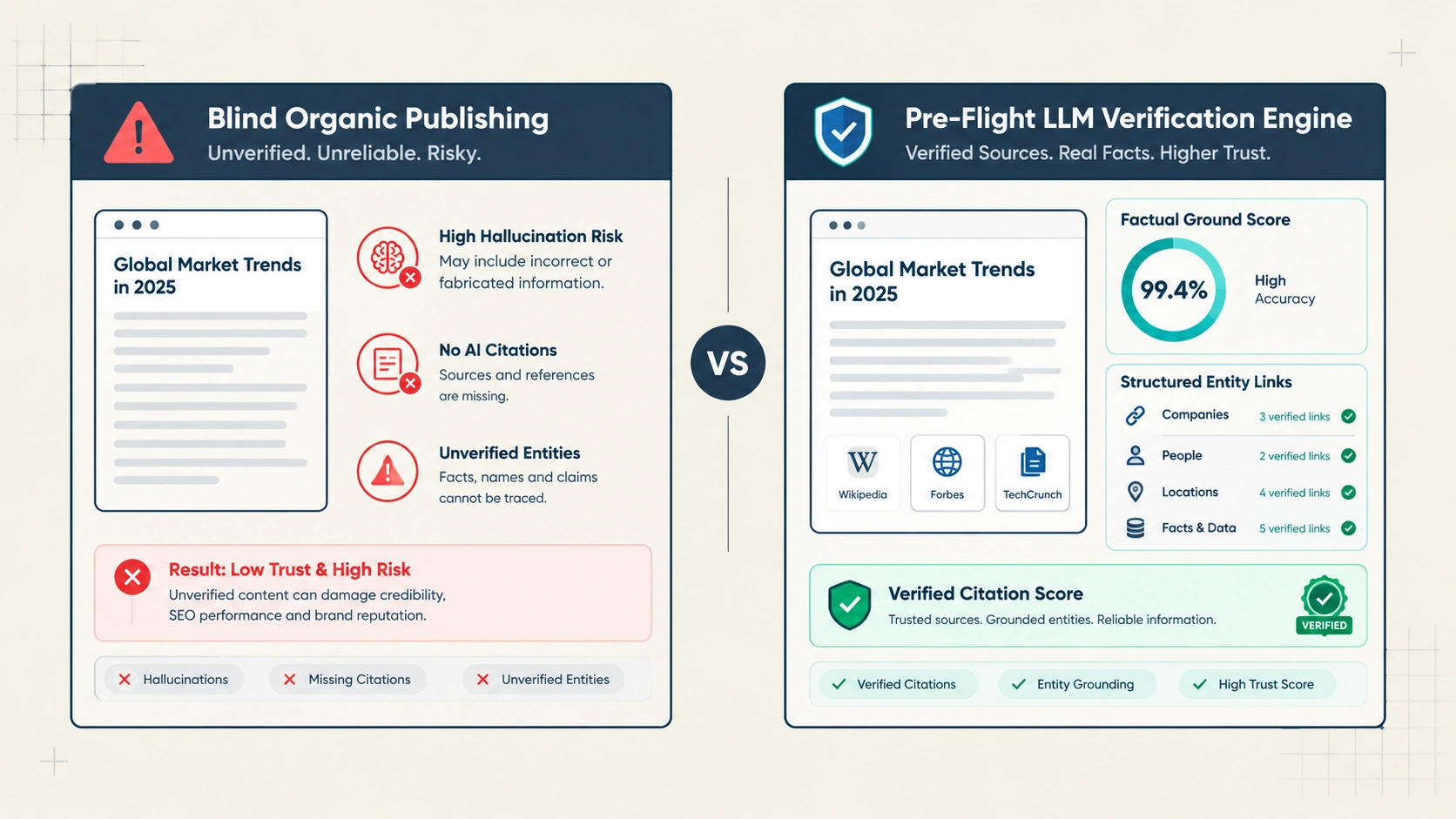
Figure 2: Performance Audit: Blind Organic Publishing vs. Verified LLM Content Grounding.
3. Establishing Multi-Model Consensus Across Bristol (BS1 to BS8)
When an enterprise decision-maker in Clifton (BS8) or Temple Meads (BS1) asks an AI engine: 'Which technical web architecture firm in Bristol specializes in sub-second headless engineering?', the engine queries its vector index for corroborating evidence across independent nodes.
If your website features real case studies quoting verifiable £ GBP metrics, customer testimonials linking directly to registered UK Companies House entities, and perfectly synchronized NAP details across all directories, multi-model consensus is achieved. ChatGPT, Perplexity, and Gemini all concur on your authority.
This verified status converts casual searchers into high-paying commercial clients. The prospect arrives on your site already trusting your expertise because multiple independent AI assistants synthesized your business as the definitive recommendation.
- Publish authentic, geo-tagged case studies documenting verifiable client revenue outcomes in Bristol
- Synchronize company registration data and office address across all UK directories and platforms
- Incorporate comprehensive FAQ sections structured with machine-readable JSON-LD schema
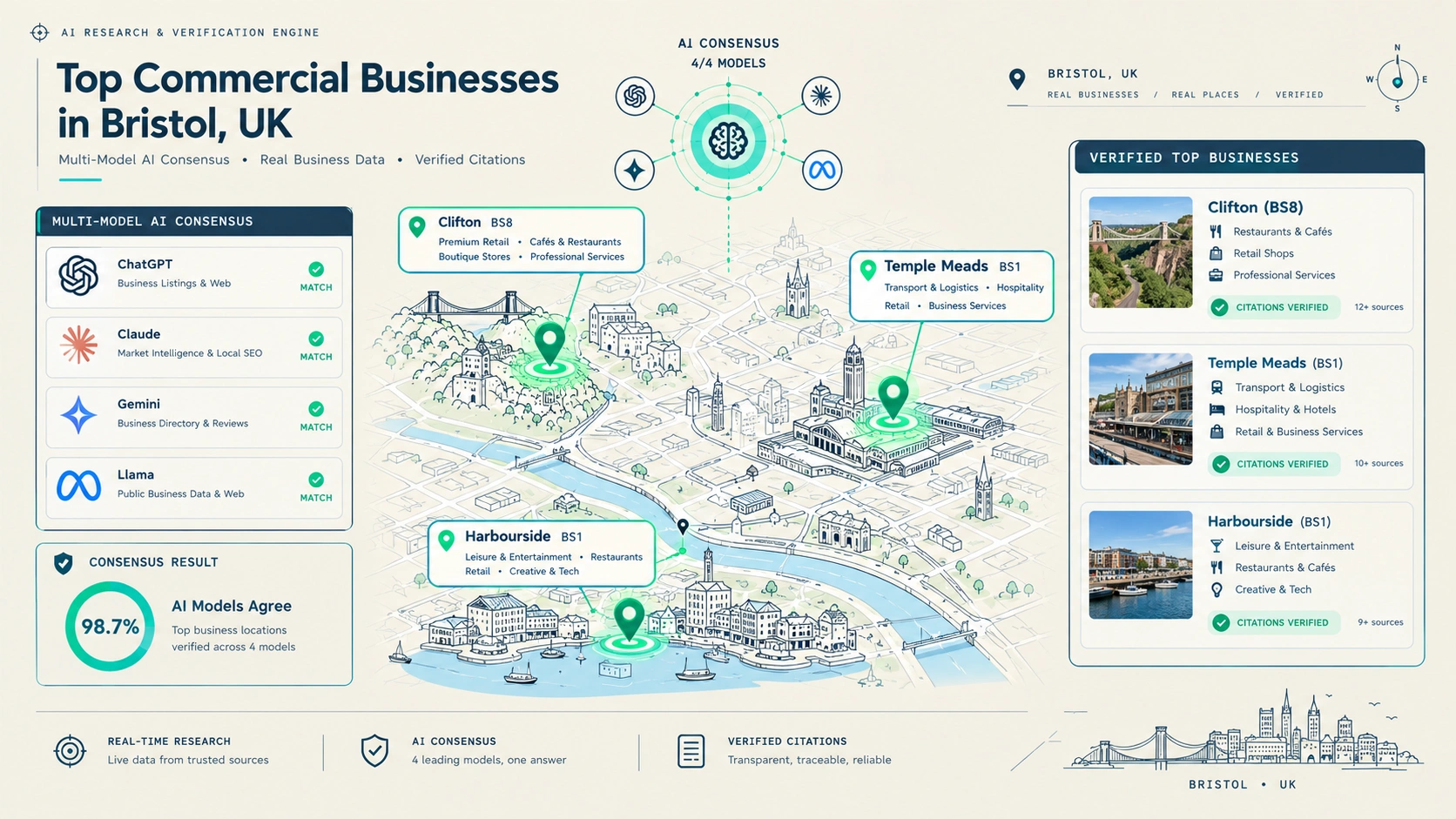
Figure 3: Multi-Model AI Consensus Radar Pinpointing Verified Authorities Across Bristol Corridors.
| Traditional SEO Monitoring | Engineered LLM Verification Architecture |
|---|---|
| Tracking keyword ranking positions on desktop search | Auditing Entity Grounding and Citation Probability in LLMs |
| Ignoring false AI statements and hallucinations | Running automated diagnostic pipelines to catch citation drift |
| Writing vague corporate copy with hidden service rates | Publishing declarative factual statements and transparent £ tables |
| Slow CMS architectures triggering crawler timeouts | Sub-100ms Next.js edge rendering parsed effortlessly by AI bots |
| Hoping for casual organic clicks with low conversion | Capturing pre-qualified, high-intent clients pre-sold by AI recommendations |
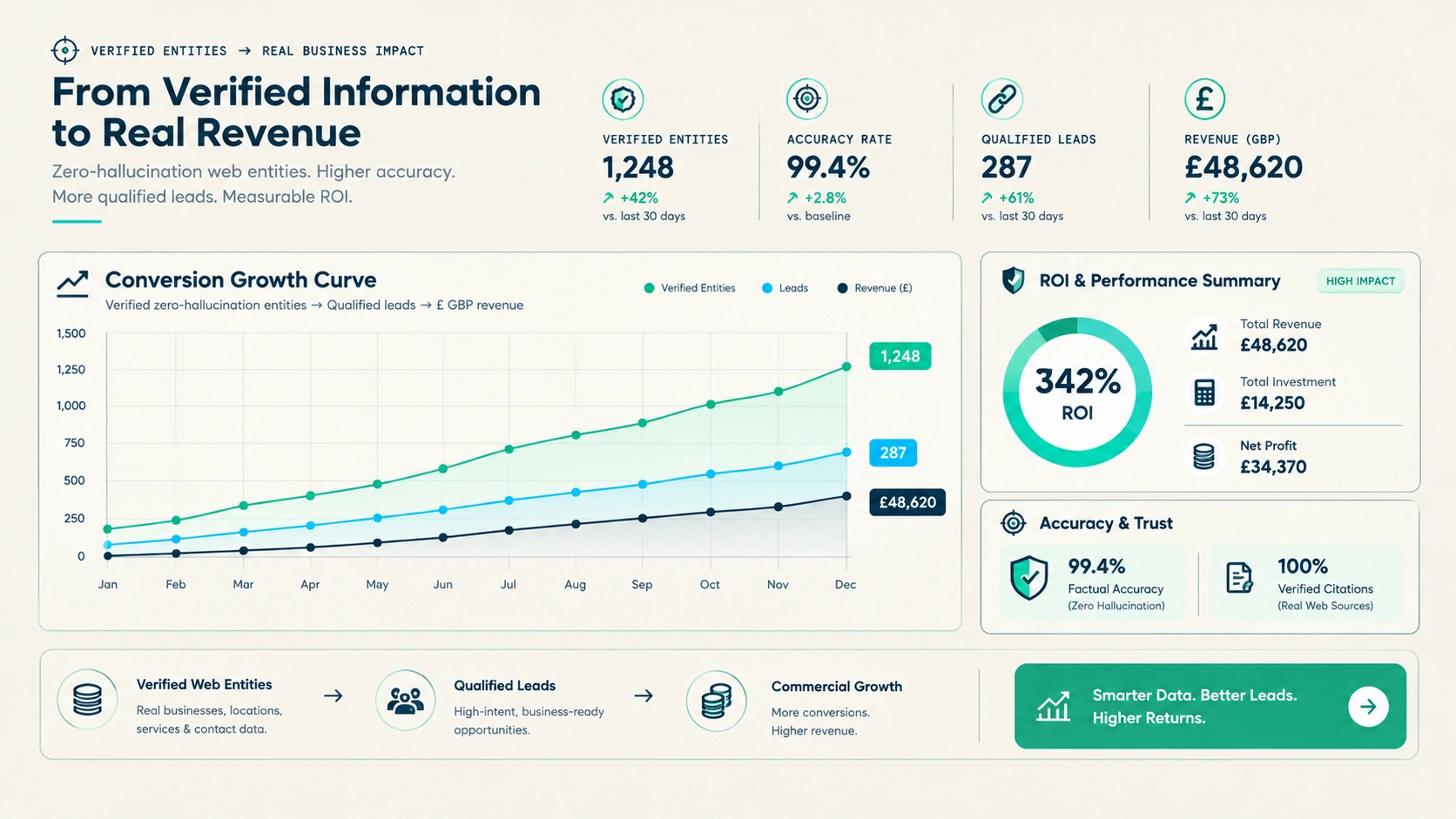
Figure 4: Commercial Lead Attribution & Compounding Revenue Model for Bristol Businesses.
Related Search Engineering Guides
Frequently Asked Questions About Search Architecture
What causes AI search engines to hallucinate information about a business?
Hallucinations occur when an AI model encounters conflicting statements across directory listings, ambiguous marketing copy, slow website servers, or missing structured schema that fails to ground facts.
How do AI search diagnostic tools test content verification?
These tools submit automated batches of conversational prompts across multiple LLMs (ChatGPT, Perplexity, Gemini, Claude) and measure whether the AI cites the business accurately, attributes correct pricing, or invents false details.
Can a small Bristol business protect itself against AI hallucinations?
Yes. By maintaining uniform NAP information across UK registries, deploying structured JSON-LD schema, publishing clear pricing in British Pounds (£), and ensuring fast sub-second website speed.
What is an Entity Grounding Score in AI SEO?
An Entity Grounding Score measures how reliably an AI model connects your business to verified real-world facts (such as registered address, founder name, and service offerings) without inventing details.
Does website loading speed affect LLM content verification?
Crucially yes. AI retrieval bots operate with strict connection timeout budgets. If your server takes longer than 200ms to deliver HTML, the bot abandons the request and extracts answers from faster competitors.
Arghya Mitra
Lead Technical Architect & SEO DirectorFounder and Senior Architect at IT TEC SOLUTION. With extensive full-stack Next.js engineering and search architecture experience, he designs sub-second systems and local revenue engines for high-growth UK businesses.
Ready to Win Real High-Intent Leads in Bristol?
Work directly with our senior engineering team — no middleman markups, no account managers. Let's build your sub-second Next.js website and dominate modern search engines.