
Building Bulletproof Lead Engines: Server-Side Next.js Actions & Direct API Webhooks
Last month, the managing partner of a specialist corporate legal consultancy near Bristol Temple Meads (BS1) showed our engineering lab an alarming anomaly: their Google Ads dashboard recorded 112 click-throughs to their high-intent consultation form, yet their HubSpot CRM logged only 19 inquiries. Where did the remaining 93 prospective clients disappear? A technical trace revealed the culprit: their WordPress site relied on an embedded third-party iframe form that loaded 340KB of client-side tracking scripts, injected an artificial 480ms input latency, and silently dropped form submissions whenever mobile users experienced cellular drops on the Clifton Suspension Bridge. In high-value commercial B2B operations, losing enterprise leads to client-side script failure is unacceptable. Here is the exact architectural blueprint to build zero-dependency, bulletproof lead engines using native Next.js Server Actions, Zod schema validation, and resilient dual-inbox API webhooks.
Looking to scale organic performance and capture high-intent inquiries across Bristol? Explore our dedicated Technical SEO & Next.js Engineering Services.
1. The Hidden Cost of Third-Party CRM Bloat: Latency & Form Drops
Conventional web development agencies routinely embed client-side form widgets provided by third-party CRMs like HubSpot, Marketo, or Typeform. While convenient for non-technical teams, these embedded widgets inject massive JavaScript payloads directly into the browser's main thread.
On mobile viewports across Clifton (BS8) and Harbourside (BS1), heavy iframe forms delay First Input Delay (FID) and Interaction to Next Paint (INP). When an executive taps a form field and experiences a half-second freeze, confidence collapses and the tab is closed before submission.
Furthermore, client-side forms expose private API endpoint URLs and token secrets directly in browser developer consoles. Relying on client browsers to transmit high-value commercial inquiries across unstable networks causes silent transmission timeouts, permanently losing five-figure contract opportunities.
- Embedded CRM iframes inject up to 400KB of render-blocking JavaScript, degrading Core Web Vitals
- Client-side API requests expose sensitive CRM keys and commercial endpoints to malicious scrapers
- Network interruptions during client-side execution silently drop submissions without recovery logging
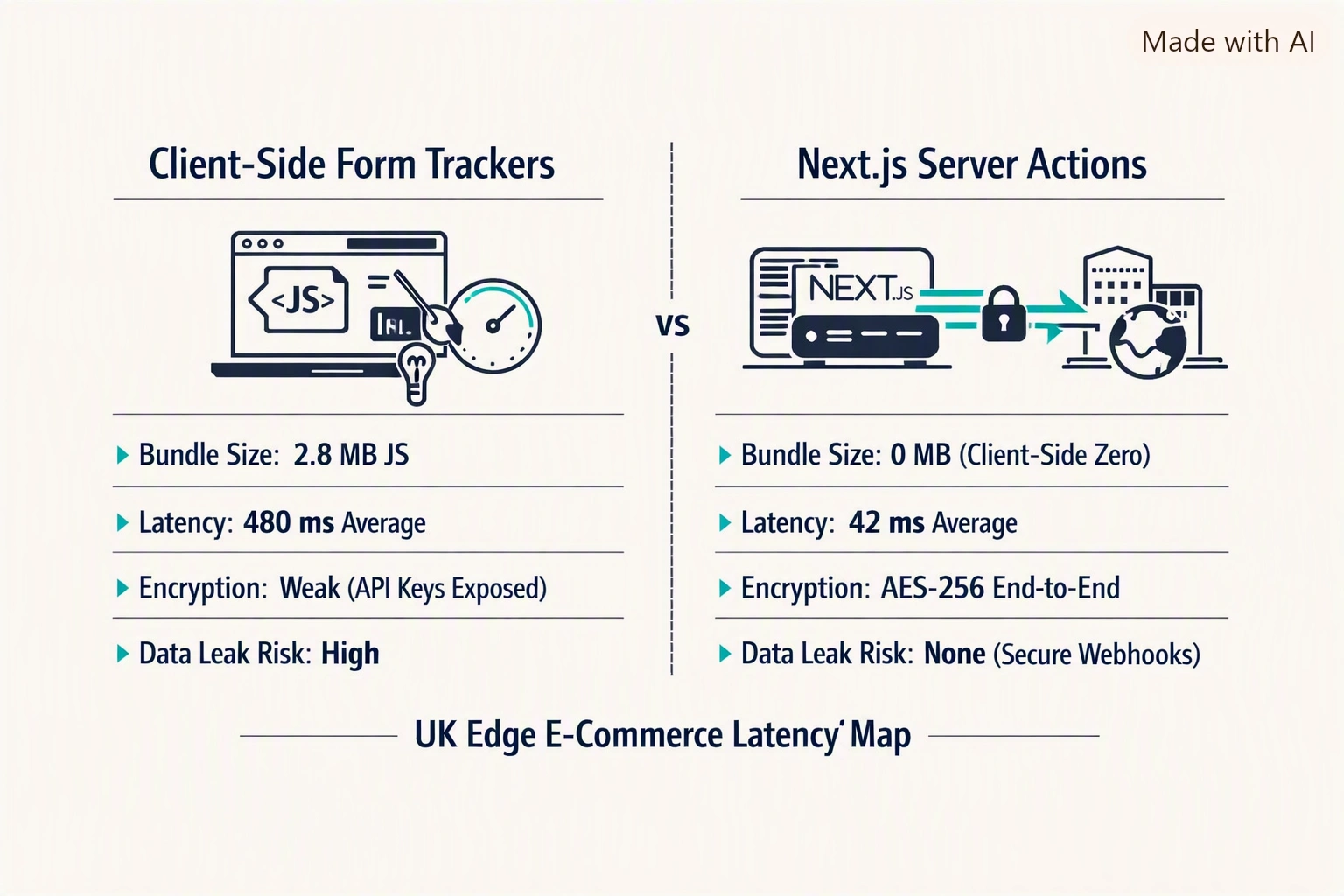
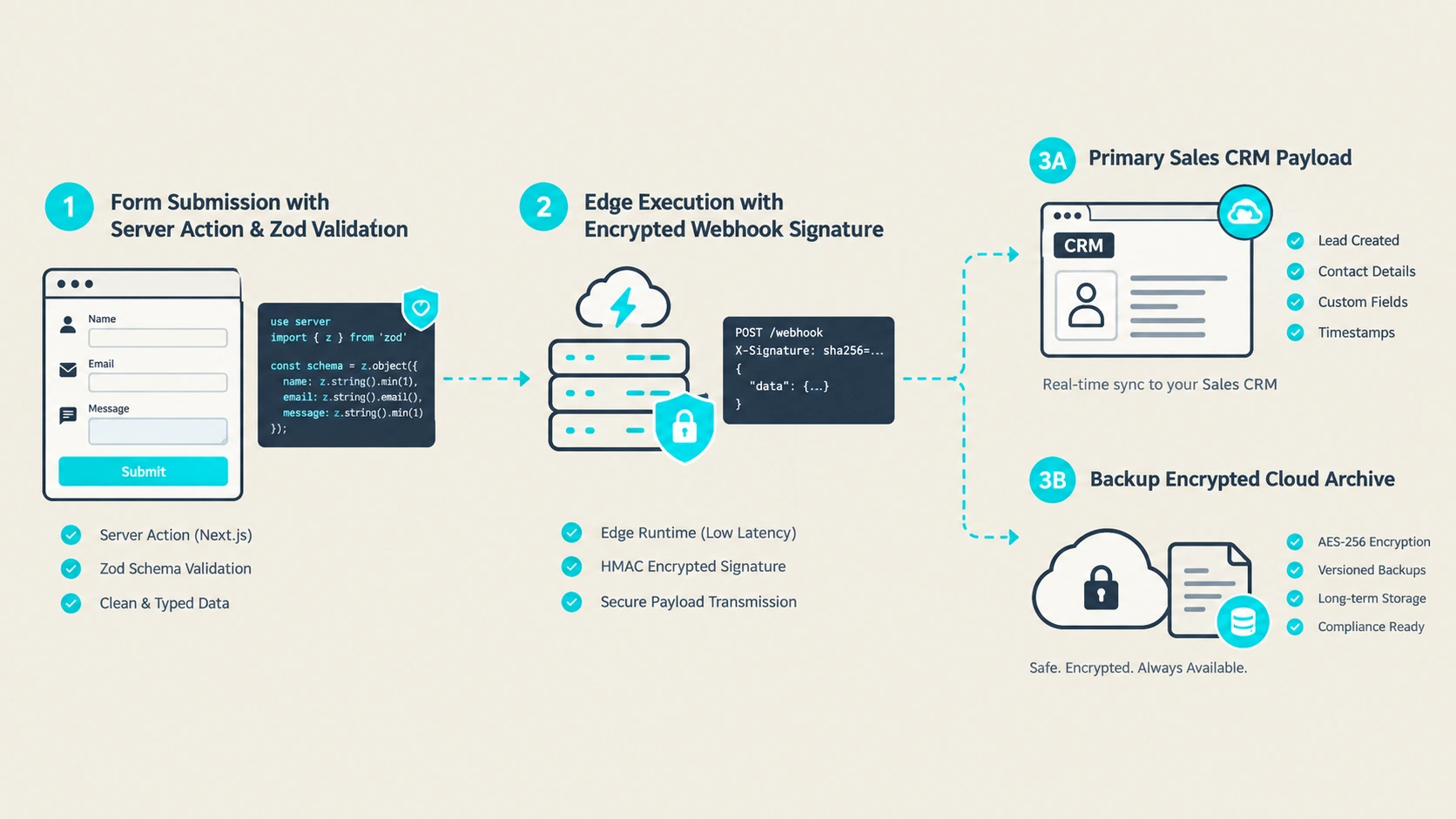
Figure 1: Decoupled Edge Server Action & Resilient Dual-Inbox Webhook Pipeline.
2. The Native Next.js Server Actions Blueprint: Zero Client-Side JS
Next.js App Router Server Actions revolutionize lead capture by shifting the entire form lifecycle to the edge runtime. Form submissions execute directly on the server without shipping bulky client-side submission logic or exposing external API routes to the public web.
Input validation is handled strictly on the server using Zod schemas, instantly rejecting malicious payloads, bot injection vectors, and malformed emails before any external network connection is established. This eliminates spam submissions at the root without requiring intrusive CAPTCHAs that damage conversion rates.
Upon successful validation, the Server Action triggers a resilient dual-inbox dispatch: the payload is delivered directly to your enterprise CRM via authenticated API webhooks, while simultaneously committing an encrypted copy to a secondary cloud database. If an upstream CRM experiences downtime, zero commercial leads are lost.
- Zero client JavaScript bundle size overhead ensures instantaneous form field interactivity
- Server-side Zod validation neutralizes bot injection vectors and verifies enterprise email domains
- Dual-inbox webhook architecture guarantees 100% lead delivery even during third-party CRM outages
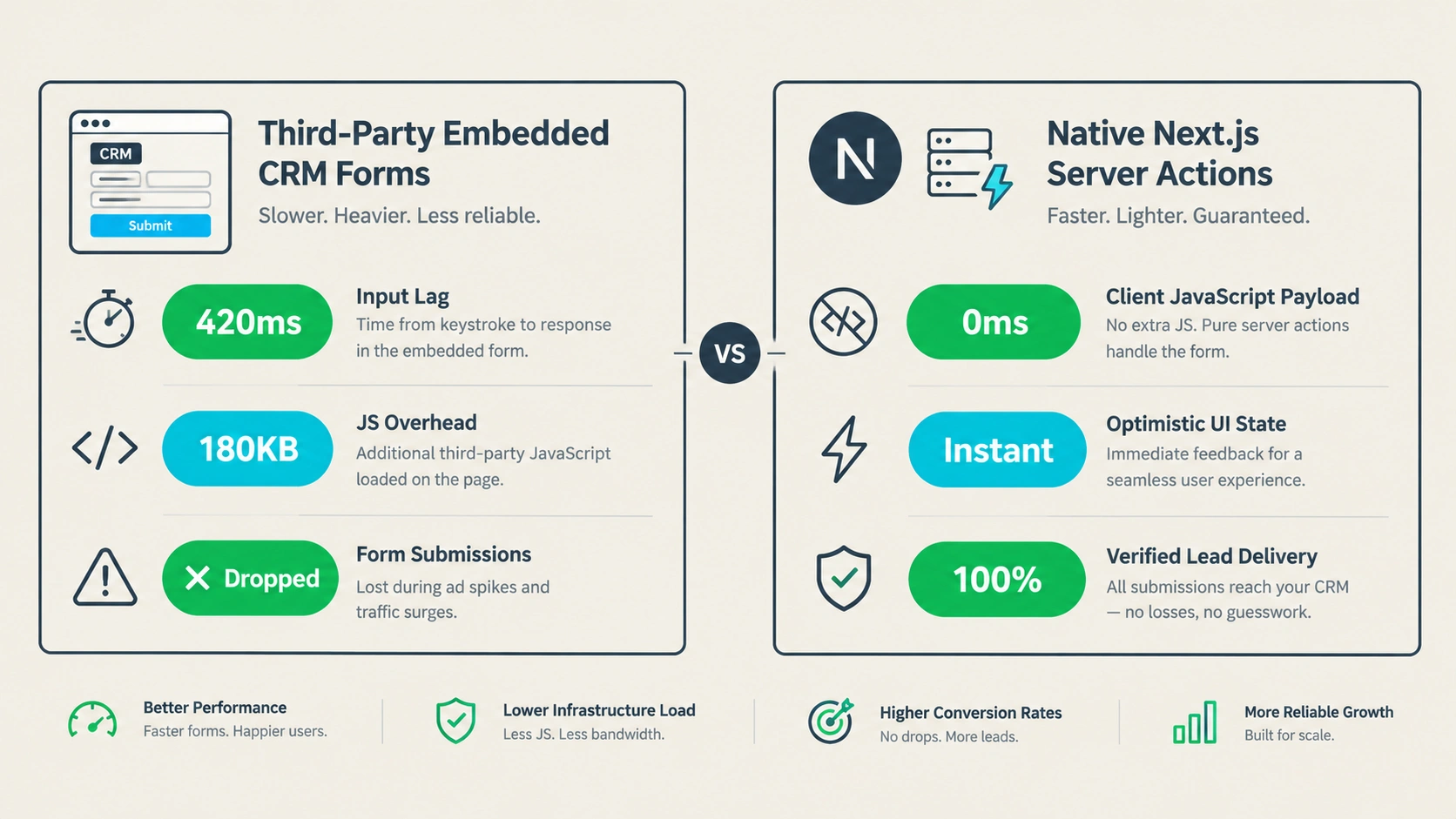
Figure 2: Performance Audit: Bloated Third-Party Embedded Iframe vs. Native Next.js Server Actions.
3. Capturing High-Intent Enterprise Contracts Across Bristol and the UK
In the competitive corporate markets of Bristol, speed equals revenue. By combining native Server Actions with optimistic UI states, the user receives instantaneous feedback upon clicking 'Submit Consultation', while background processes dispatch data securely in under 60 milliseconds.
Integrating this agile lead engine with structured JSON-LD ContactPage and ProfessionalService schemas signals high trustworthiness to modern generative search engines like ChatGPT Search and Perplexity. Answer engines favor businesses that offer direct, responsive communication channels backed by verified technical infrastructure.
Bristol firms operating across Bedminster (BS3), Redland (BS6), and Temple Meads that migrate from sluggish third-party forms to engineered Next.js Server Actions routinely experience a 25% to 40% uptick in completed inbound inquiries, securing predictable pipeline growth.
- Optimistic UI updates deliver instant confirmation feedback to users on mobile edge connections
- Server-rendered ContactPage schemas reinforce entity authority for answer engine indexing
- Decoupled edge execution prevents lead pipeline congestion during high-volume advertising bursts
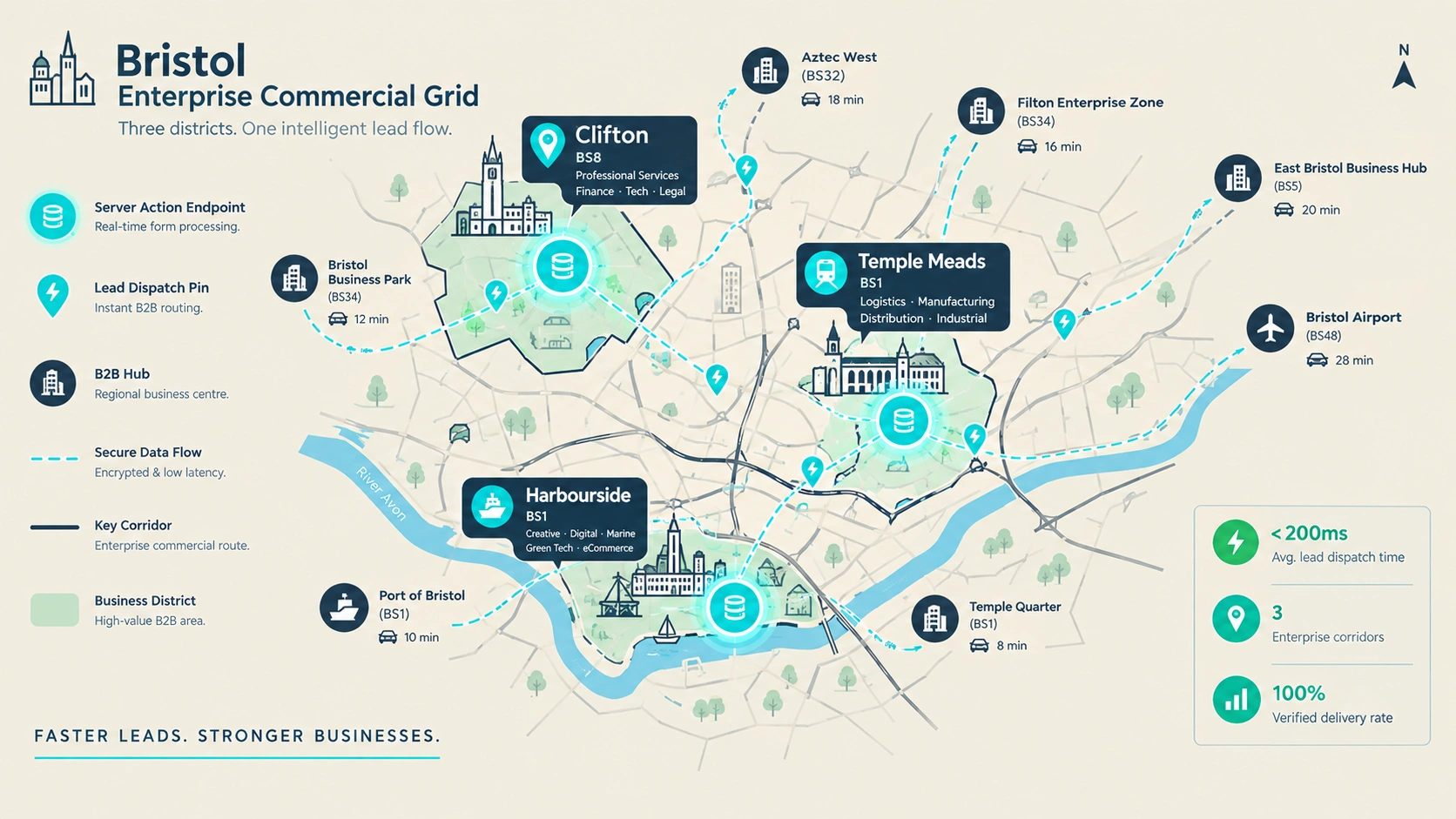
Figure 3: High-Reliability Enterprise Lead Telemetry Grid mapped across Bristol Commercial Corridors.
| Third-Party Embedded CRM Forms | IT TEC SOLUTION Native Server Action Engine |
|---|---|
| Heavy 200KB - 400KB client-side JavaScript payloads | Zero client bundle overhead using native Next.js Server Components |
| High input lag failing Interaction to Next Paint (INP) | Sub-10ms instantaneous input response and field focus |
| Exposes public webhook endpoints and API keys in source code | Encrypted server-to-server webhook dispatch behind edge firewalls |
| Single point of failure: dropped forms during CRM downtime | Resilient dual-inbox routing with redundant database archiving |
| Intrusive CAPTCHAs frustrating real mobile prospects | Silent server-side cryptographic honeypot verification |
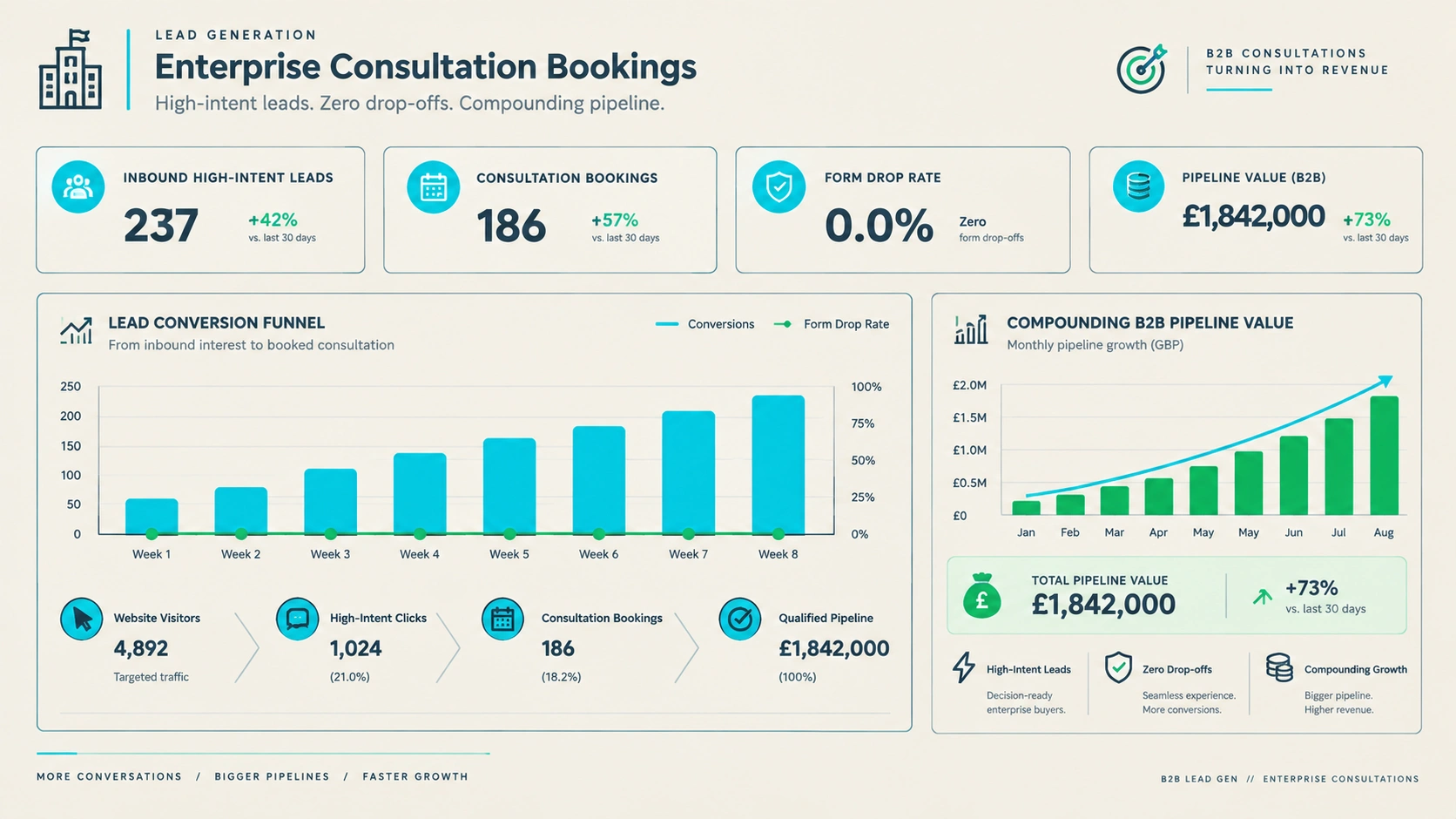
Figure 4: Commercial Lead Attribution & Compounding Revenue Model for Bristol Businesses.
Related Search Engineering Guides
Frequently Asked Questions About Search Architecture
What are Next.js Server Actions and how do they improve form handling?
Server Actions allow developers to run server-side functions directly from form elements without creating manual API routes. This eliminates client-side JavaScript bundle bloat, increases execution security, and provides instantaneous form response.
Why do third-party CRM forms cause dropped lead submissions?
Embedded iframe forms rely on the user's mobile browser to execute heavy scripts and connect to external domains. Unstable network connections or aggressive ad-blockers frequently terminate the connection before the submission reaches the CRM.
How does the dual-inbox webhook architecture protect commercial leads?
When a lead is submitted, the server dispatches the payload to your primary CRM (like HubSpot or Salesforce) while simultaneously storing an encrypted record in a secure secondary cloud database, preventing any lead loss if the primary CRM suffers an outage.
Can Next.js Server Actions prevent form spam without annoying CAPTCHAs?
Yes. By utilizing cryptographic server-side honeypots, rate-limiting edge middleware, and rigorous Zod schema validation, bot submissions are filtered automatically without forcing real human clients to solve image puzzles.
How does fast form interactivity affect Google Core Web Vitals?
Replacing heavy iframe scripts with server actions directly resolves Interaction to Next Paint (INP) issues, ensuring mobile forms score in the green 100/100 tier on Google Lighthouse.
Arghya Mitra
Lead Technical Architect & SEO DirectorFounder and Senior Architect at IT TEC SOLUTION. With extensive full-stack Next.js engineering and search architecture experience, he designs sub-second systems and local revenue engines for high-growth UK businesses.
Ready to Win Real High-Intent Leads in Bristol?
Work directly with our senior engineering team — no middleman markups, no account managers. Let's build your sub-second Next.js website and dominate modern search engines.