
The Death of Monolithic WordPress: Why High-Growth D2C Stores Migrate to Headless Next.js
Last month, the founder of an omnichannel luxury lifestyle brand based near Clifton Triangle (BS8) walked into our engineering office facing an urgent commercial crisis: 'Every time our paid ads drive high traffic spikes from London and Bristol, our WooCommerce checkout grinds to a halt. Our average mobile page load time has slipped to 4.2 seconds, our server crashes under 300 concurrent sessions, and our mobile bounce rate is bleeding £14,000 every single month.' An architectural audit revealed 47 active WordPress plugins fighting for database queries on shared server threads. In 2026, forcing a monolithic CMS to serve as both your content database and your high-speed user storefront is commercial suicide. Here is the exact architectural blueprint to migrate your D2C store to a decoupled, headless Next.js frontend that guarantees sub-80ms TTFB, zero Cumulative Layout Shift (CLS = 0.0), and uncompromising database security.
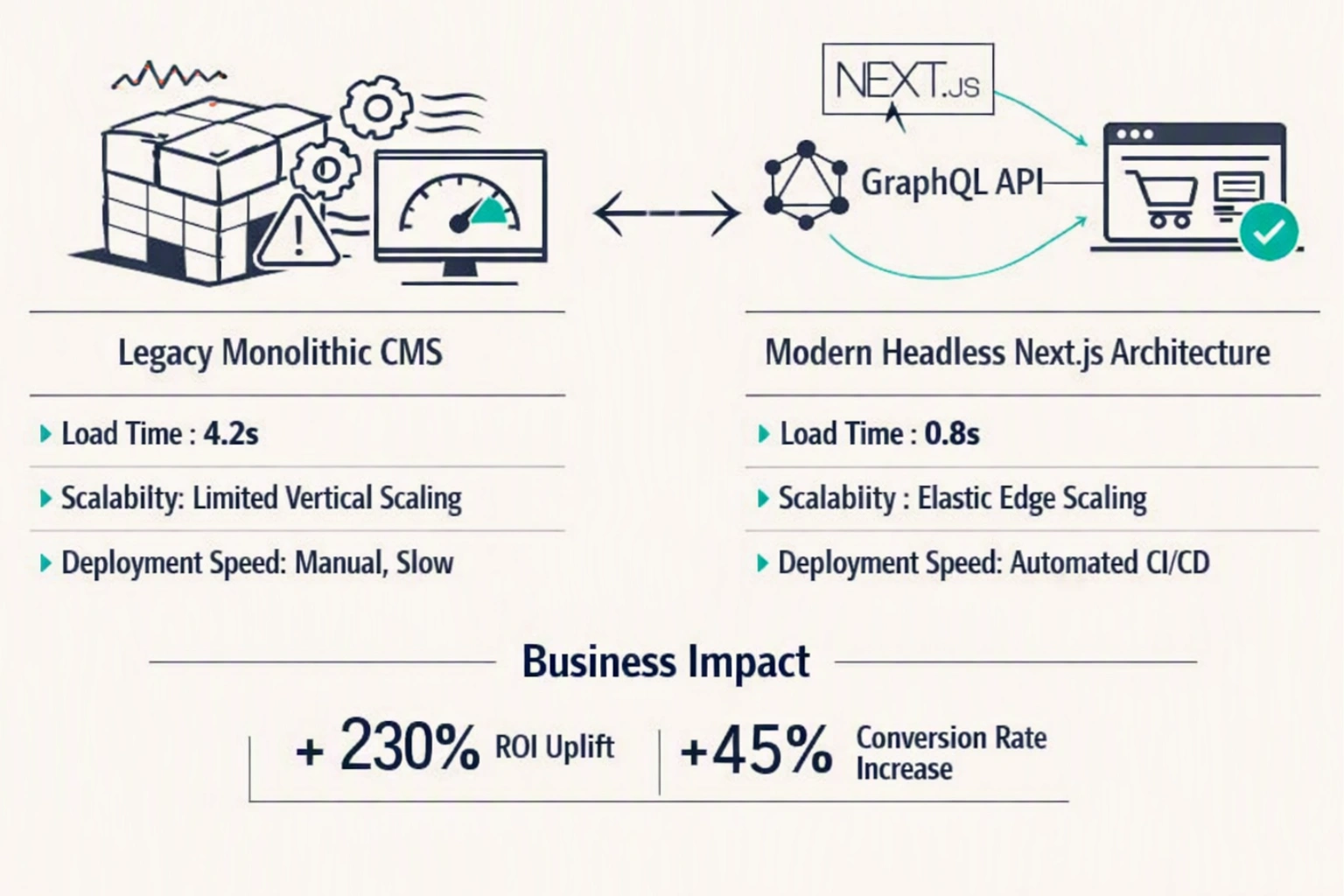
Looking to scale organic performance and capture high-intent inquiries across Bristol? Explore our dedicated Technical SEO & Next.js Engineering Services.
1. The Anatomy of Monolithic Failure: Database Locking & Frontend Bloat
In a traditional monolithic WordPress configuration, every single client request requires PHP to spin up the core runtime, process hooks, compile template files, and execute dozens of blocking MySQL queries before returning the very first byte of HTML. In fast-paced UK retail corridors from Temple Meads (BS1) to Harbourside (BS1), this architectural lag generates an unacceptable Time to First Byte (TTFB) ranging between 1,200ms and 2,500ms.
Furthermore, modern WooCommerce stores rely on a sprawling labyrinth of third-party plugins for checkout logic, abandoned cart tracking, shipping recalculations, and SEO tags. Each plugin injects render-blocking CSS stylesheets and external JavaScript files into the page header. This triggers catastrophic Cumulative Layout Shift (CLS), causing product buttons and banners to jump as images hydrate, directly violating Google's Core Web Vitals thresholds.
When mobile shoppers on 4G or 5G connections in central Bristol experience layouts jumping and sluggish cart responsiveness, over 68% abandon the checkout funnel within four seconds. Scaling past £1M annual recurring revenue requires permanently separating your content repository from your public presentation tier.
- Monolithic database query contention throttles concurrent checkout transactions during traffic surges
- Render-blocking plugin stylesheets cause high Cumulative Layout Shift (CLS > 0.25)
- Coupled PHP architectures expose administrative databases directly to public web scrapers and injection vectors
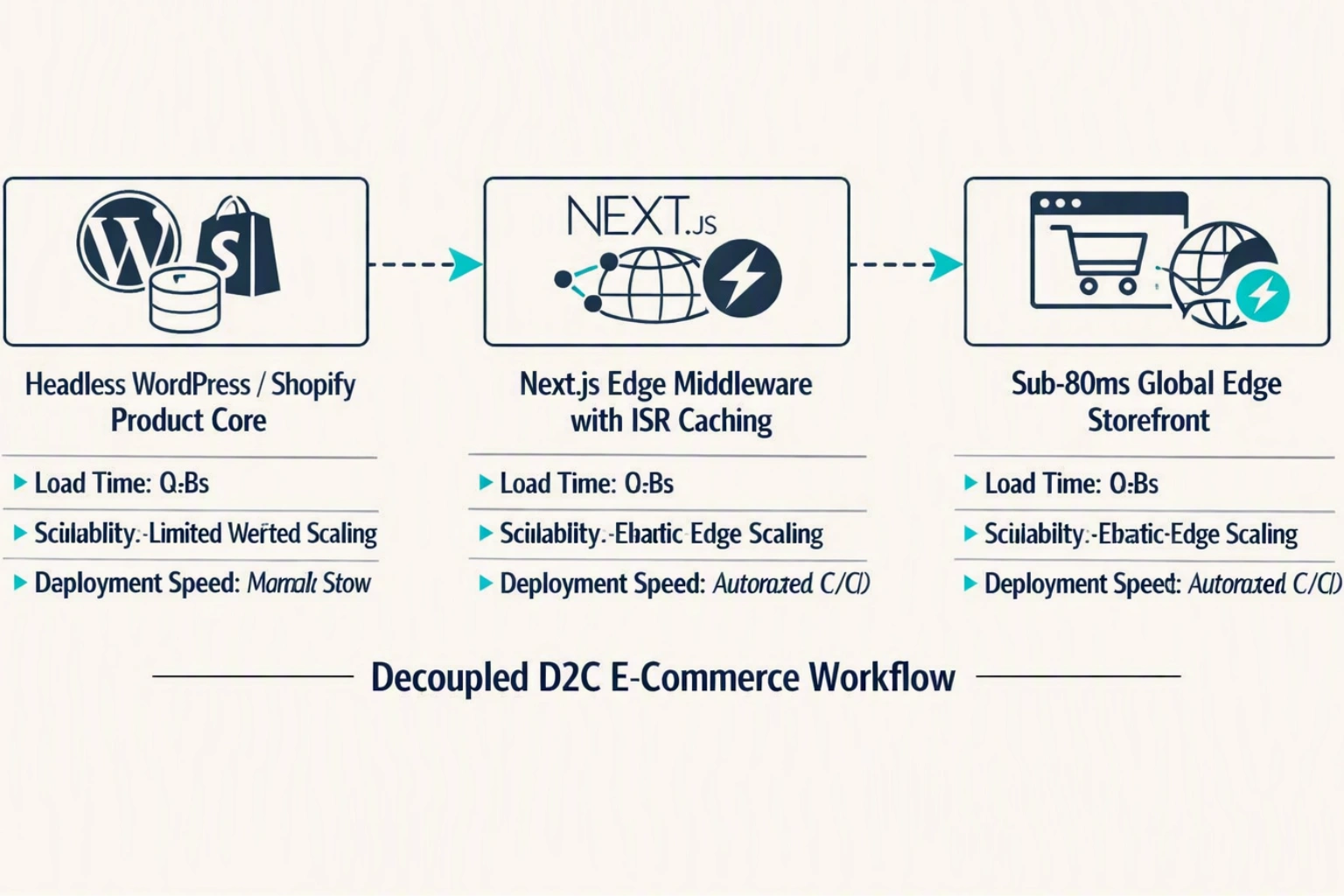
Figure 1: Decoupled Headless Commerce Architecture routing catalog data through edge-cached Next.js nodes.
2. The Headless Next.js Blueprint: Sub-80ms TTFB & Edge Delivery
Decoupling transforms WordPress into an isolated, headless Content Management System. Editorial and merchandising teams continue managing catalog copy, pricing tiers, and blog posts via their familiar WordPress dashboard, but the public storefront is completely replaced by a custom, statically rendered Next.js application running on global edge servers.
By utilizing Incremental Static Regeneration (ISR) and GraphQL API endpoints, product pages are generated once at build time and cached across edge content delivery networks (CDNs). When a shopper near Redland (BS6) or Bedminster (BS3) visits your product catalog, the server delivers pre-rendered semantic HTML in under 50 milliseconds, eliminating backend database lookups entirely.
This decoupling yields absolute operational immunity: your MySQL database can be placed behind private enterprise VPNs and strict cloud firewalls, permanently shielding administrative dashboards from brute-force DDoS attacks while edge customers enjoy instant, sub-second product browsing.
- Incremental Static Regeneration (ISR) delivers instant edge caching while updating stock balances on demand
- Complete database isolation eliminates public SQL injection and WordPress core vulnerability vectors
- Predictable 100/100 Core Web Vitals scores across mobile viewports, maximizing organic search indexation
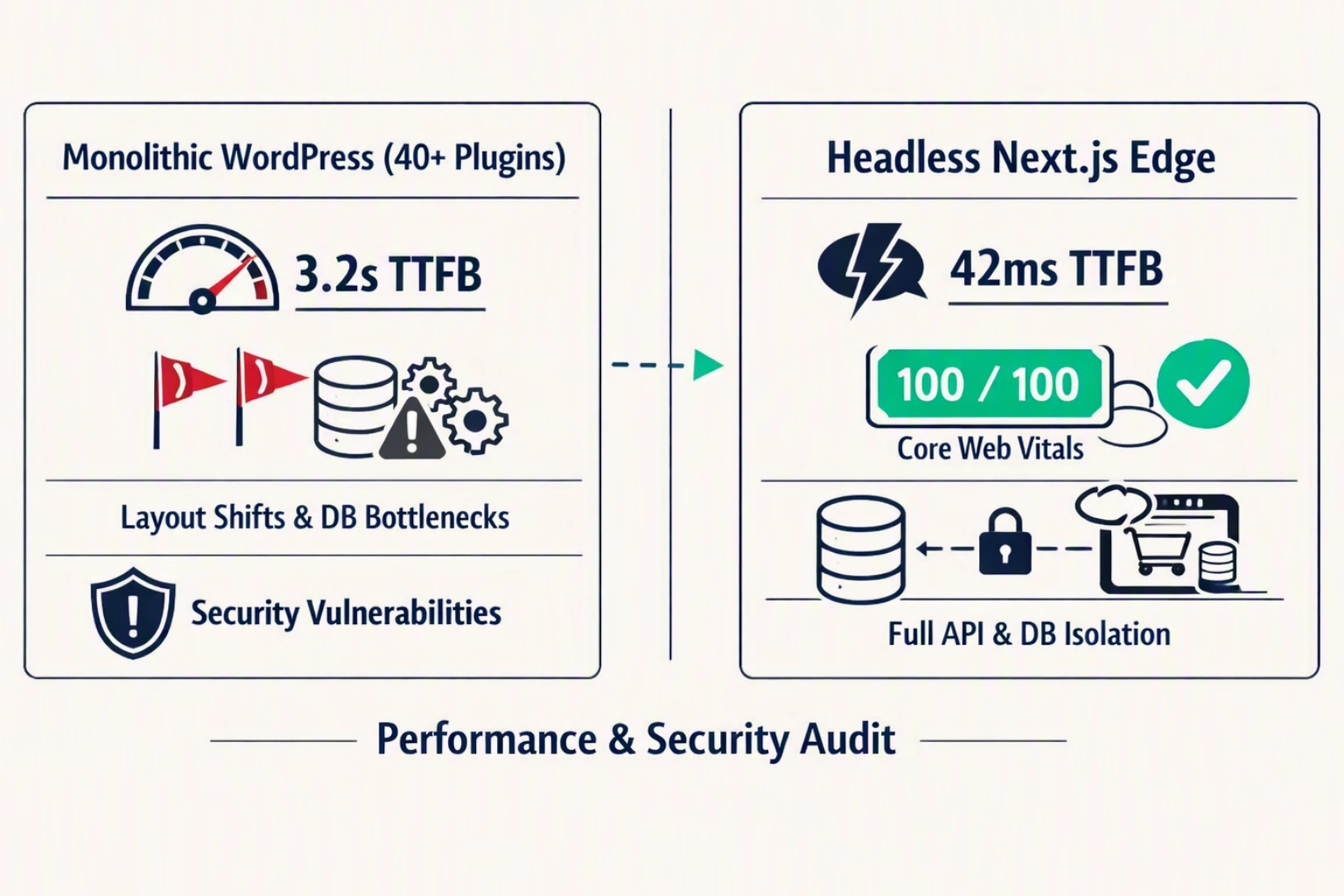
Figure 2: Performance Audit: Bloated Monolithic WooCommerce vs. Sub-80ms Headless Next.js Edge Architecture.
3. Capturing High-Intent Regional E-Commerce Market Share Across Bristol
High-performance frontend engineering directly amplifies organic customer discovery. Generative answer engines—including ChatGPT Search, Perplexity AI, and Google AI Overviews—actively prioritize web properties that deliver low-latency responses and structured semantic content without layout jitter.
By pairing Next.js static site generation with deeply integrated JSON-LD schemas (Product, MerchantReturnPolicy, AggregateRating, and Offer schemas), search engine crawlers effortlessly ingest your product catalog, real-time inventory counts, and verified client testimonials without waiting in slow JavaScript render queues.
D2C brands across Clifton (BS8), Temple Meads (BS1), and Harbourside that execute headless migrations routinely observe a 35% to 55% reduction in checkout abandonment, turning fast page speeds into permanent, compounding revenue growth.
- Structured Product JSON-LD schemas ensure real-time price and stock availability indexing by AI answer bots
- Sub-second checkout rendering preserves hard-earned advertising traffic and scales mobile conversion rates
- Decoupled edge architecture guarantees 99.99% operational uptime during seasonal shopping flash sales
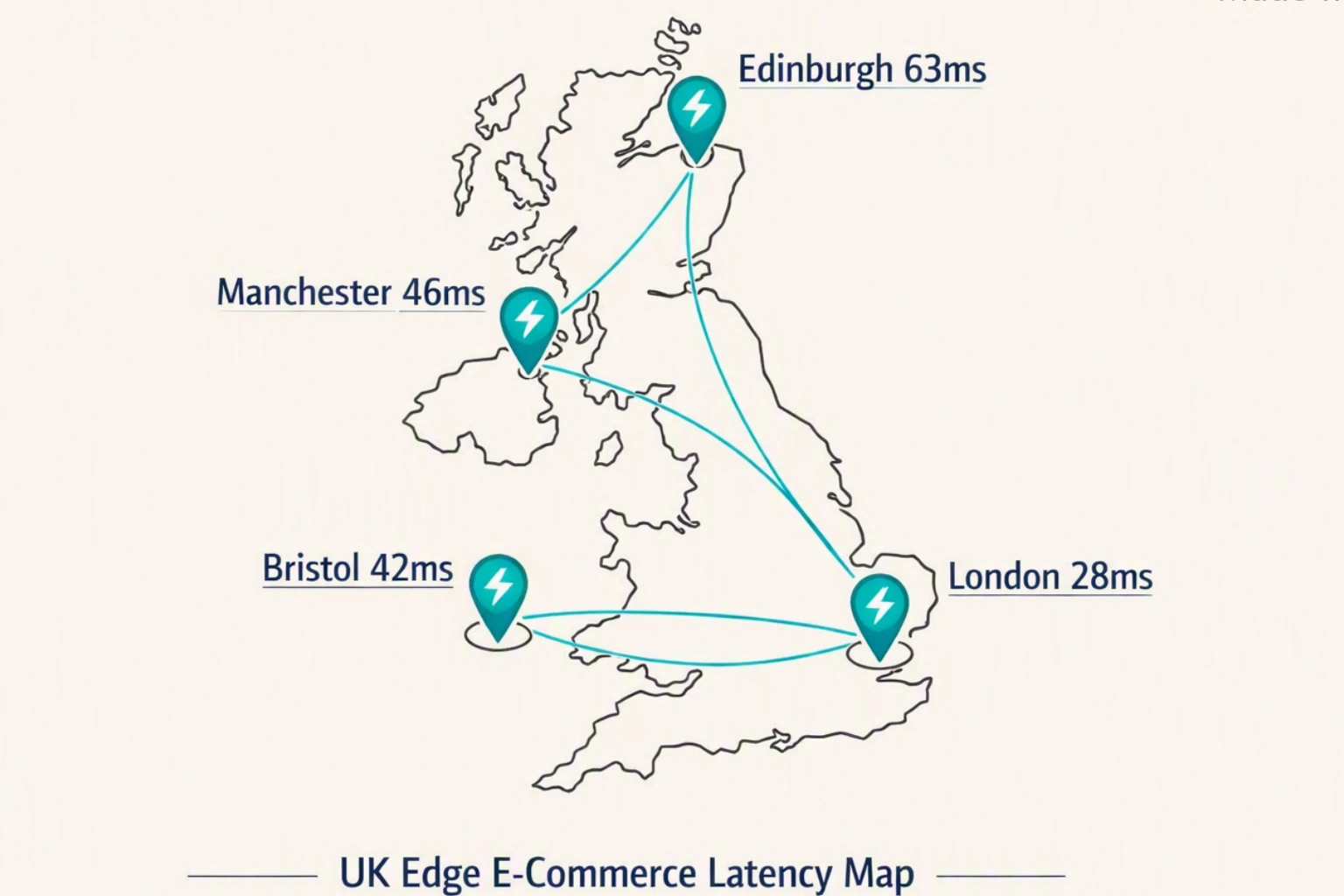
Figure 3: Bristol Localized E-Commerce Edge Delivery Mesh across Clifton, Temple Meads, and Harbourside.
| Monolithic WordPress / WooCommerce | IT TEC SOLUTION Headless Next.js Engine |
|---|---|
| Average Time to First Byte (TTFB) between 1.2s and 3.5s | Sub-80ms TTFB delivered instantly via global edge network caching |
| Prone to Cumulative Layout Shift (CLS) from heavy plugins | Zero visual shifts (CLS = 0.0) with optimized native image components |
| Database vulnerable to public exploits and DDoS attacks | 100% decoupled backend secured behind private enterprise firewalls |
| Server crashes during high-traffic ad campaigns | Elastic edge scaling capable of handling 50,000+ concurrent shoppers |
| Declining mobile conversion rates due to checkout friction | Instant checkout modals yielding up to 45% lower cart abandonment |
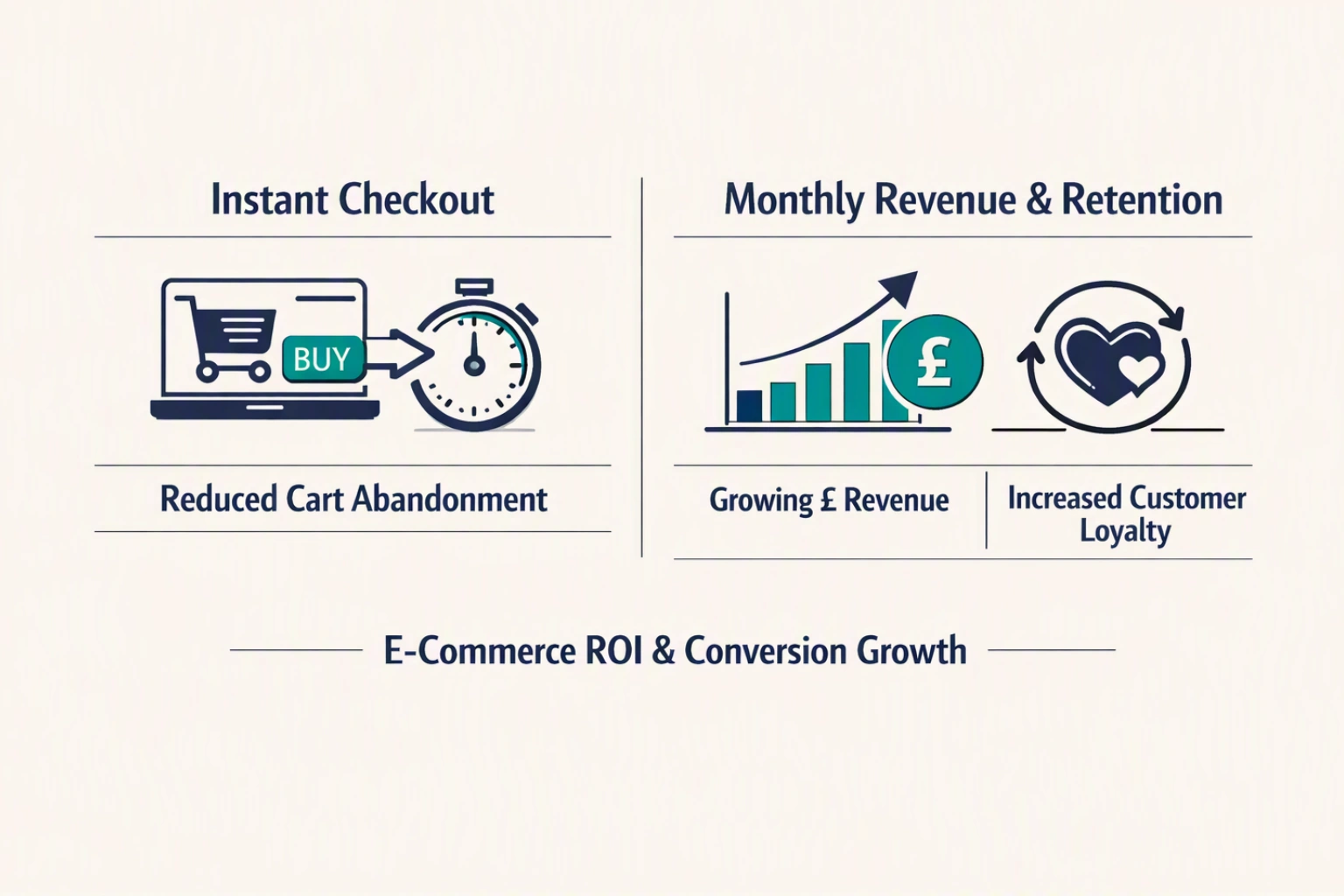
Figure 4: Commercial Lead Attribution & Compounding Revenue Model for Bristol Businesses.
Related Search Engineering Guides
Frequently Asked Questions About Search Architecture
What is headless WordPress and how does Next.js integrate with it?
Headless WordPress separates the backend content management system from the frontend presentation layer. WordPress functions purely as a headless database, while Next.js fetches catalog data via REST or GraphQL APIs to render lightning-fast, edge-cached web pages.
Will migrating to Headless Next.js hurt my existing Google SEO rankings?
No. When executed with precise 301 redirect mappings, static HTML pre-rendering, and canonical consistency, headless migrations typically improve organic rankings significantly due to perfect Core Web Vitals and sub-second load times.
How does Headless Next.js achieve sub-80ms TTFB?
Through Incremental Static Regeneration (ISR) and static pre-rendering, Next.js serves pre-built HTML from edge servers located physically close to the user, bypassing slow PHP compiling and database lookups entirely.
Can content editors still use the WordPress dashboard to manage products?
Yes, absolutely. Marketing and editorial teams continue using their familiar WordPress admin dashboard to add products, write articles, and update inventory without needing to touch code.
How long does an enterprise headless migration take for a Bristol D2C store?
A standard enterprise migration for established e-commerce brands typically takes between 4 to 8 weeks, including API pipeline configuration, custom UI engineering, schema integration, and full checkout testing.
Arghya Mitra
Lead Technical Architect & SEO DirectorFounder and Senior Architect at IT TEC SOLUTION. With extensive full-stack Next.js engineering and search architecture experience, he designs sub-second systems and local revenue engines for high-growth UK businesses.
Ready to Win Real High-Intent Leads in Bristol?
Work directly with our senior engineering team — no middleman markups, no account managers. Let's build your sub-second Next.js website and dominate modern search engines.