How to Calculate Real SEO ROI: Why B2B Brands Must Track Pipeline, Not Just Clicks
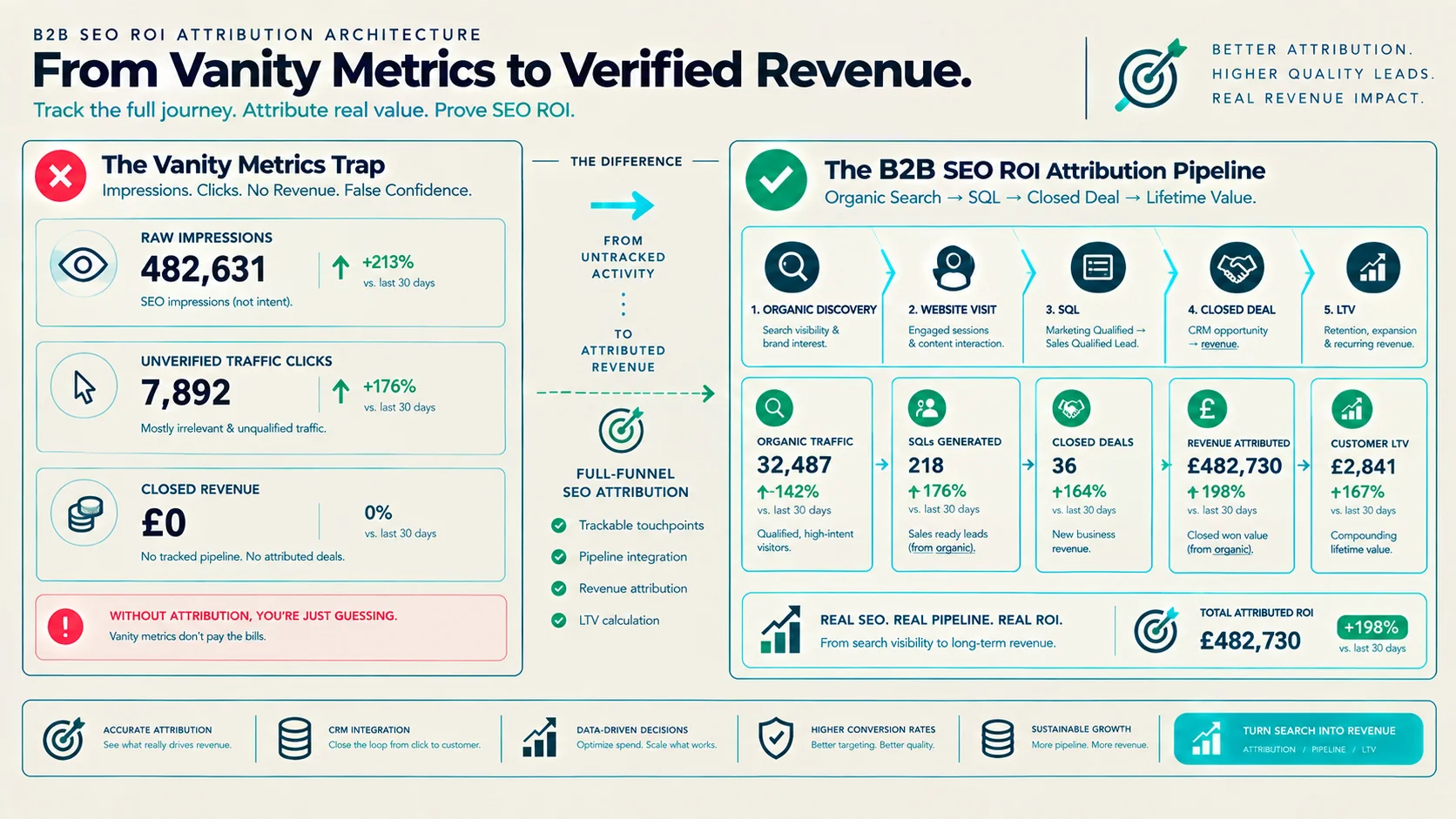
Last quarter, the Chief Financial Officer of an enterprise B2B logistics SaaS company headquartered near Bristol Temple Meads (BS1) confronted their marketing leadership with a brutal question: 'Our monthly agency report shows a 250% increase in organic blog sessions and 80,000 monthly impressions. Yet our sales team logged zero closed contracts originating from organic search this quarter. We spent £36,000 on content marketing this year—where is the actual pipeline revenue?' This disconnect represents the fundamental crisis in modern B2B search marketing. Traditional agencies report on vanity metrics—top-of-funnel informational traffic, raw page views, and keyword rankings that never translate into commercial contracts. In enterprise B2B environments where deal cycles span 3 to 9 months and average annual contract values (ACV) exceed £25,000, organic discovery must be tracked against closed pipeline, Customer Acquisition Cost (CAC), and customer Lifetime Value (LTV). Here is our definitive engineering framework for measuring, attributing, and compounding true organic search ROI for UK commercial enterprises.
Looking to scale organic performance and capture high-intent inquiries across Bristol? Explore our dedicated Technical SEO & Next.js Engineering Services.
1. The Vanity Traffic Fallacy: Why Impressions Do Not Pay Salaries
In the conventional agency model, SEO success is defined by upward-sloping traffic graphs in Google Analytics. Marketing managers celebrate ranking #1 for informational queries like 'what is supply chain optimization' or 'top office design ideas'. However, over 95% of these visitors are casual students, entry-level researchers, or overseas browsing traffic with zero buying intent.
Across commercial technology hubs from Harbourside (BS1) to Aztec West (BS32), generating traffic without commercial intent creates an illusion of growth while burning marketing capital. B2B decision-makers—such as Procurement Directors, CTOs, and Managing Partners—do not convert from generic listicles.
True B2B SEO focuses exclusively on commercial and transactional search intent: queries that reflect high-stakes organizational pain points, software migrations, compliance mandates, and enterprise vendor evaluations. Capturing 200 high-intent enterprise visitors will always generate more commercial pipeline than 50,000 irrelevant informational clicks.
- Informational keyword inflation inflates page views while generating zero sales pipeline
- Vanity metrics mask underlying commercial attribution failure in executive boardrooms
- High-intent bottom-of-funnel queries yield up to 12x higher conversion rates for enterprise B2B contracts
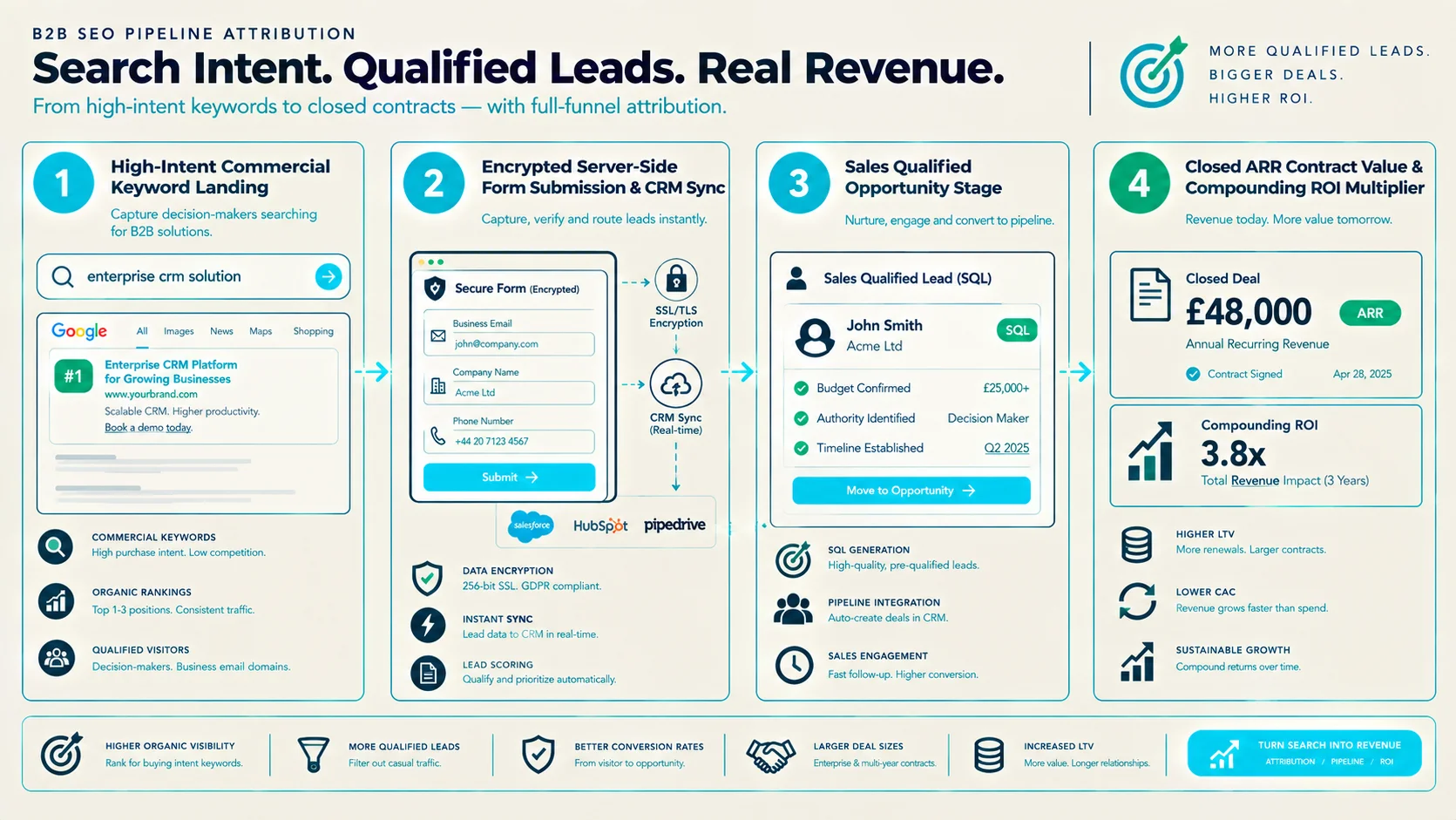
Figure 1: Full-Funnel B2B SEO Pipeline Attribution & Closed Revenue Architecture.
2. The Mathematical Framework: Attribution, CAC, and Lifetime Value
Calculating verifiable B2B SEO ROI requires integrating your server-rendered Next.js digital presence directly with enterprise CRM platforms like HubSpot or Salesforce via encrypted webhooks.
We implement closed-loop multi-touch attribution that tags inbound organic entries with first-touch and last-touch parameters. When an enterprise prospect from Clifton (BS8) submits a consultation form, their entire journey—from initial organic whitepaper ingestion to final contract signing—is logged with complete financial attribution.
The standard engineering formula for B2B SEO ROI is: `ROI = ((Total Closed Organic Pipeline Value × Gross Margin) - Total Organic Investment) ÷ Total Organic Investment × 100`. Furthermore, because organic assets compound without recurring pay-per-click toll fees, the Customer Acquisition Cost (CAC) through search decreases by 30% to 60% year-over-year.
- Closed-loop CRM integration connects organic search entries directly to closed Annual Recurring Revenue (ARR)
- Multi-touch attribution models accurately credit complex, multi-stakeholder enterprise buying journeys
- Organic customer acquisition cost diminishes over time as domain topical authority compounds
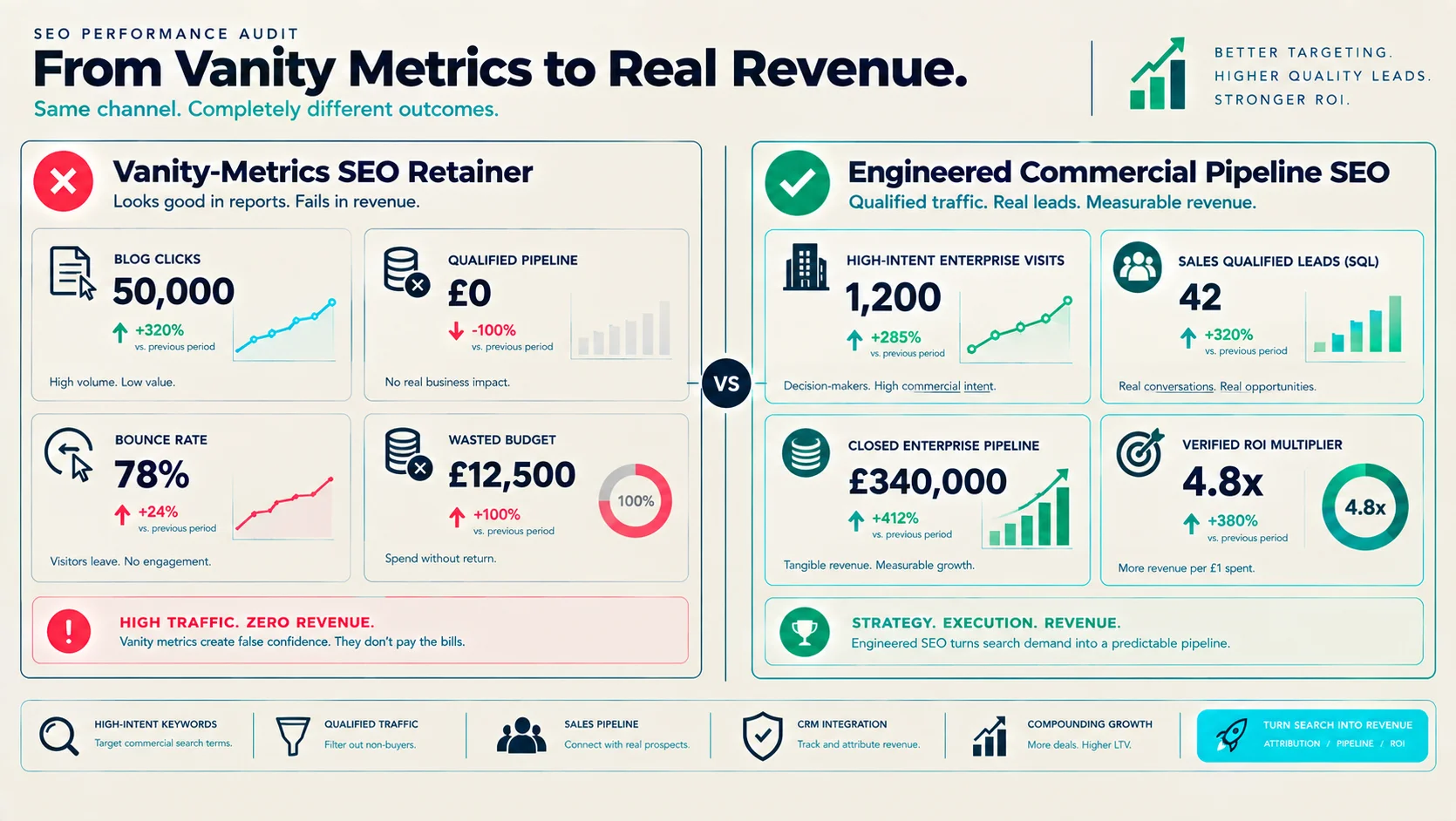
Figure 2: Financial Performance Audit: Vanity Traffic Retainer vs. Engineered Commercial Pipeline Engine.
3. Capturing High-Value Commercial Enterprise Contracts Across Bristol
For B2B service firms operating across Bristol commercial corridors—encompassing Bedminster (BS3), Temple Meads (BS1), and North Bristol business parks—organic search is the most defensible customer acquisition engine available.
When procurement executives evaluate enterprise vendors, they increasingly utilize modern generative AI engines (such as Perplexity and ChatGPT Search) alongside traditional search engines. If your platform serves pre-rendered semantic HTML, verified client case studies, and clear technical pricing frameworks, AI answer bots systematically cite your firm as the premier regional authority.
By replacing vanity blog content with engineered commercial comparison matrices, detailed case studies, and sub-second Next.js edge performance, Bristol B2B brands routinely achieve a 4x to 8x return on organic search investments within 12 months.
- Target bottom-of-funnel evaluation terms to capture active procurement searches across Bristol postcodes
- Optimize semantic entity schemas to secure authoritative recommendations in generative AI answer engines
- Deliver sub-second page performance to eliminate interaction friction for C-suite decision-makers
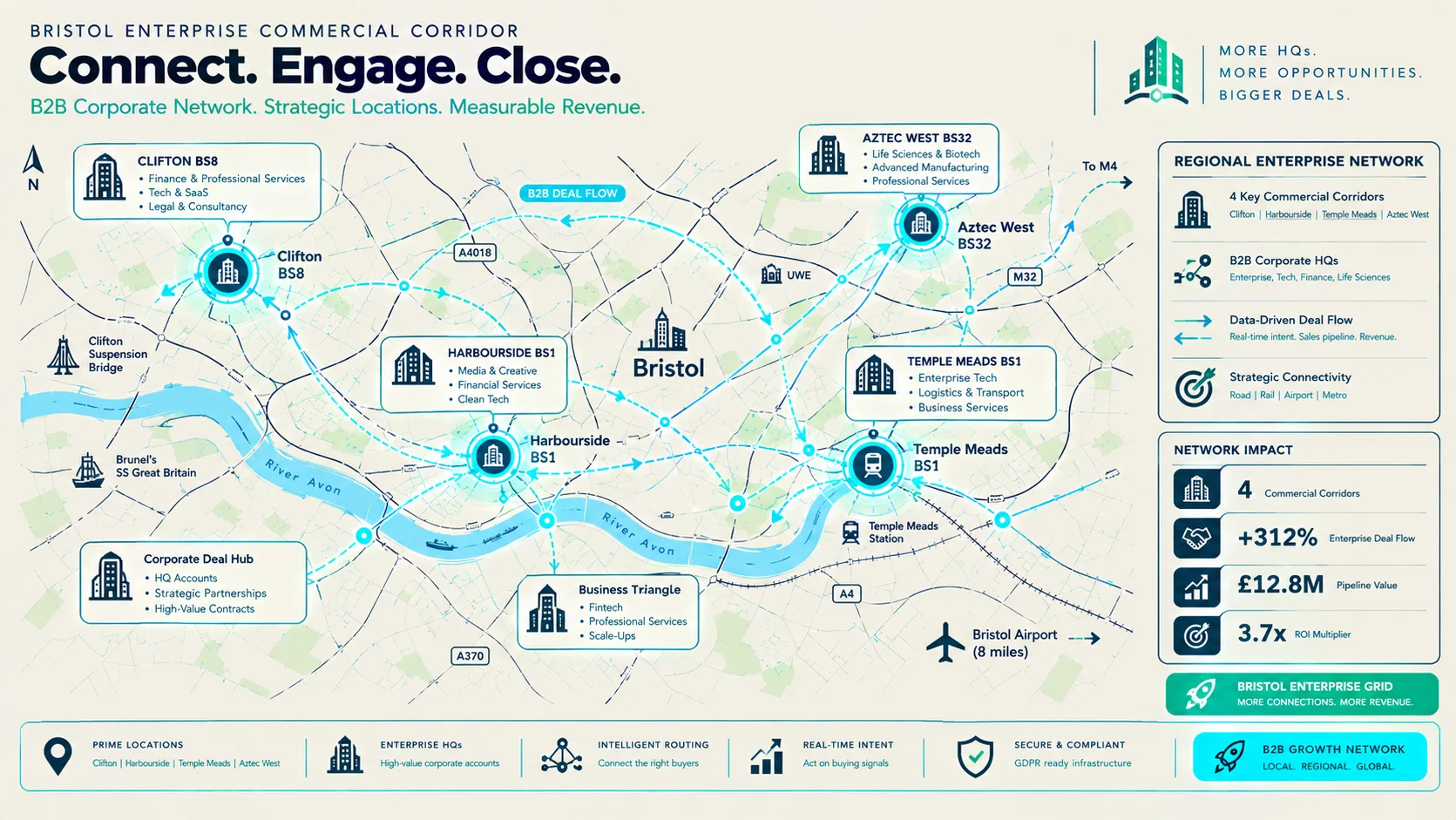
Figure 3: Bristol Enterprise Commercial Corridors & B2B Inbound Pipeline Network.
| Traditional Vanity-Metrics SEO | IT TEC SOLUTION Commercial Pipeline SEO |
|---|---|
| Measures raw impressions, sessions, and keyword counts | Measures Sales Qualified Leads (SQL) and closed pipeline ARR in £ GBP |
| Targets high-volume, generic informational keywords | Targets high-intent commercial and transactional evaluation queries |
| Relies on fragmented Google Analytics pageview reporting | Closed-loop CRM integration with multi-touch attribution tracking |
| No correlation with sales pipeline or business revenue | Verifiable mathematical ROI calculations presented directly to the CFO |
| Traffic drops the moment low-quality link building stops | Compounding domain authority delivering lower Customer Acquisition Cost |
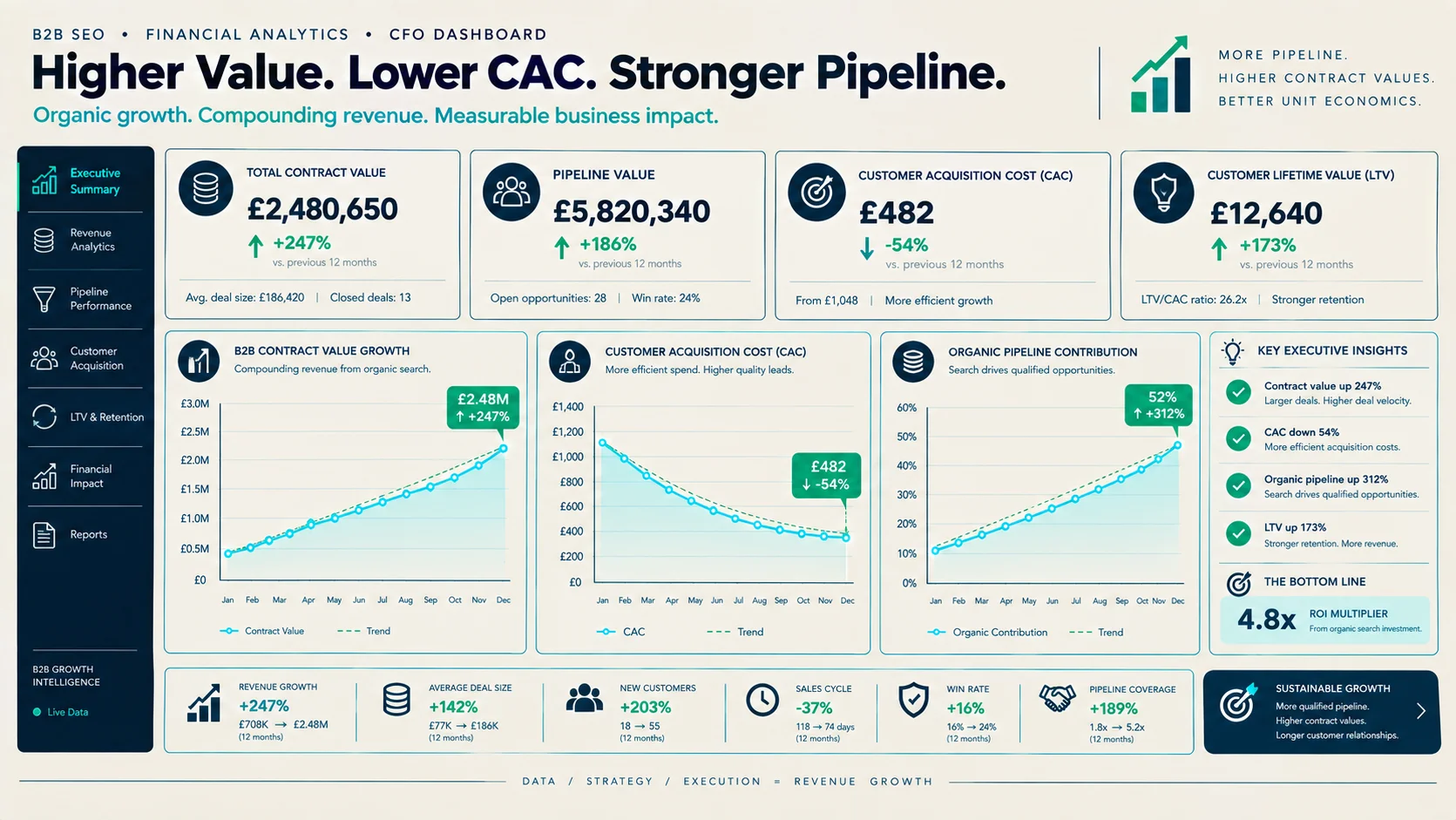
Figure 4: Commercial Lead Attribution & Compounding Revenue Model for Bristol Businesses.
Related Search Engineering Guides
Frequently Asked Questions About Search Architecture
How do you calculate SEO ROI for a B2B company?
B2B SEO ROI is calculated by tracking closed deals generated from organic search through your CRM, multiplying by your gross profit margin, subtracting total SEO spend, and dividing by total SEO spend: `((Gross Profit from Organic - SEO Cost) / SEO Cost) * 100`.
What is a good ROI for B2B enterprise SEO?
A healthy mature B2B SEO campaign typically achieves between a 4x and 8x ROI (400% to 800%) within 12 to 24 months as organic topical authority and pipeline velocity compound without ongoing per-click costs.
Why should B2B companies prioritize pipeline over organic traffic volume?
In B2B sales with high contract values, total traffic volume is irrelevant if visitors do not fit your Ideal Customer Profile (ICP). A few dozen qualified enterprise procurement visits generate far more revenue than thousands of student pageviews.
How long does it take for B2B SEO to generate closed revenue?
While initial qualified leads often begin arriving within 3 to 6 months, closed revenue reflects your company's average sales cycle. For enterprise deals with 6-month buying cycles, full closed-loop revenue attribution matures between months 9 and 12.
How does organic search lower Customer Acquisition Cost (CAC)?
Unlike paid search ads where customer acquisition stops the moment ad spend halts, high-performing organic assets remain indexed indefinitely, lowering the average cost per acquired lead every single month.
Arghya Mitra
Lead Technical Architect & SEO DirectorFounder and Senior Architect at IT TEC SOLUTION. With extensive full-stack Next.js engineering and search architecture experience, he designs sub-second systems and local revenue engines for high-growth UK businesses.
Ready to Win Real High-Intent Leads in Bristol?
Work directly with our senior engineering team — no middleman markups, no account managers. Let's build your sub-second Next.js website and dominate modern search engines.