Modern WordPress Alternatives: Decoupled CMS Architectures Built for Speed
Three weeks ago, the chief operating officer of a high-growth financial technology firm near Bristol Temple Meads (BS1) asked our architecture team a pivotal strategic question: 'We are spending £2,400 every month maintaining our legacy WordPress site—patching plugin vulnerabilities, paying for dedicated staging servers, and wrestling with slow mobile page speeds. If we migrate away from traditional WordPress, which decoupled CMS actually scales without technical debt?' The answer is not simple. In 2026, building an enterprise web presence requires matching your editorial workflows with the right headless data layer. Whether leveraging Headless WordPress for editorial familiarity, Strapi for open-source self-hosted sovereignty, or Sanity for real-time structured content graphs, decoupling your backend from a Next.js edge frontend delivers sub-50ms TTFB, bulletproof database isolation, and zero Core Web Vitals penalties. Here is our forensic engineering breakdown to help UK enterprises choose the ideal decoupled architecture.
Looking to scale organic performance and capture high-intent inquiries across Bristol? Explore our dedicated Technical SEO & Next.js Engineering Services.
1. The Monolithic Dilemma: Why High-Growth UK Firms Outgrow Classic WordPress
Traditional monolithic CMS architectures couple the editorial authoring environment, database queries, and HTML rendering into a single, fragile PHP execution runtime. When marketing teams in Clifton (BS8) and Harbourside (BS1) deploy dozens of third-party plugins for page building, form capture, analytics, and SEO, server execution overhead compounds exponentially.
Every client request triggers blocking database lookups, resulting in sluggish Time to First Byte (TTFB > 1,500ms) and unpredictable Cumulative Layout Shift (CLS). Furthermore, plugin security vulnerabilities represent over 90% of all recorded web application compromises, requiring endless maintenance retainers and emergency security patch deployments.
Decoupled web engineering permanently dismantles this fragility. By separating the content database from the public frontend presentation layer, your public website runs entirely on globally distributed edge networks, insulating your core business data from external traffic shocks and malicious threat vectors.
- Traditional monolithic architectures suffer from plugin sprawl, causing severe Core Web Vitals degradation
- Public-facing PHP runtimes expose administrative MySQL databases to continuous security vulnerabilities
- Decoupled architectures isolate data schemas, allowing frontend interfaces to achieve sub-50ms load times
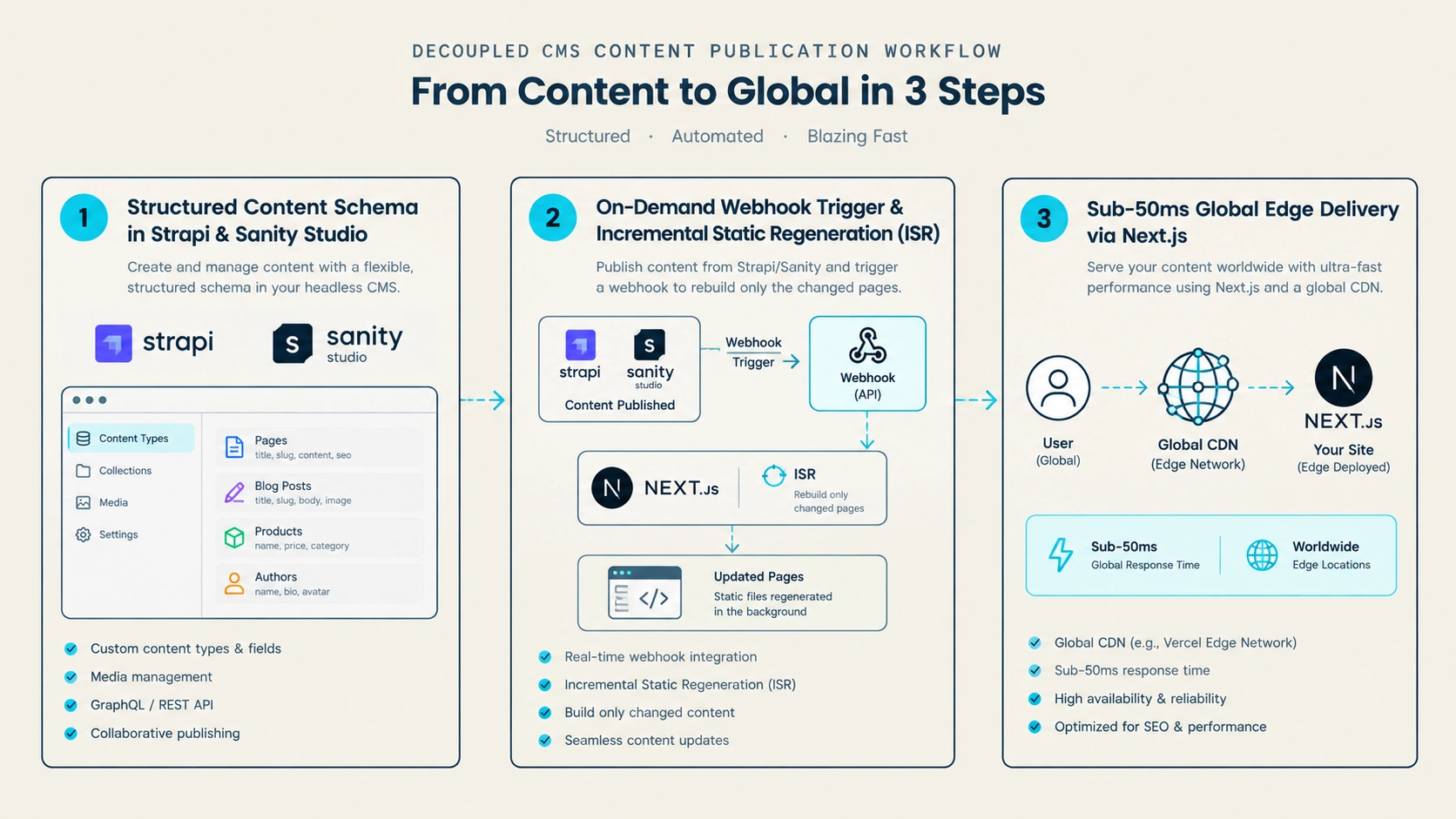
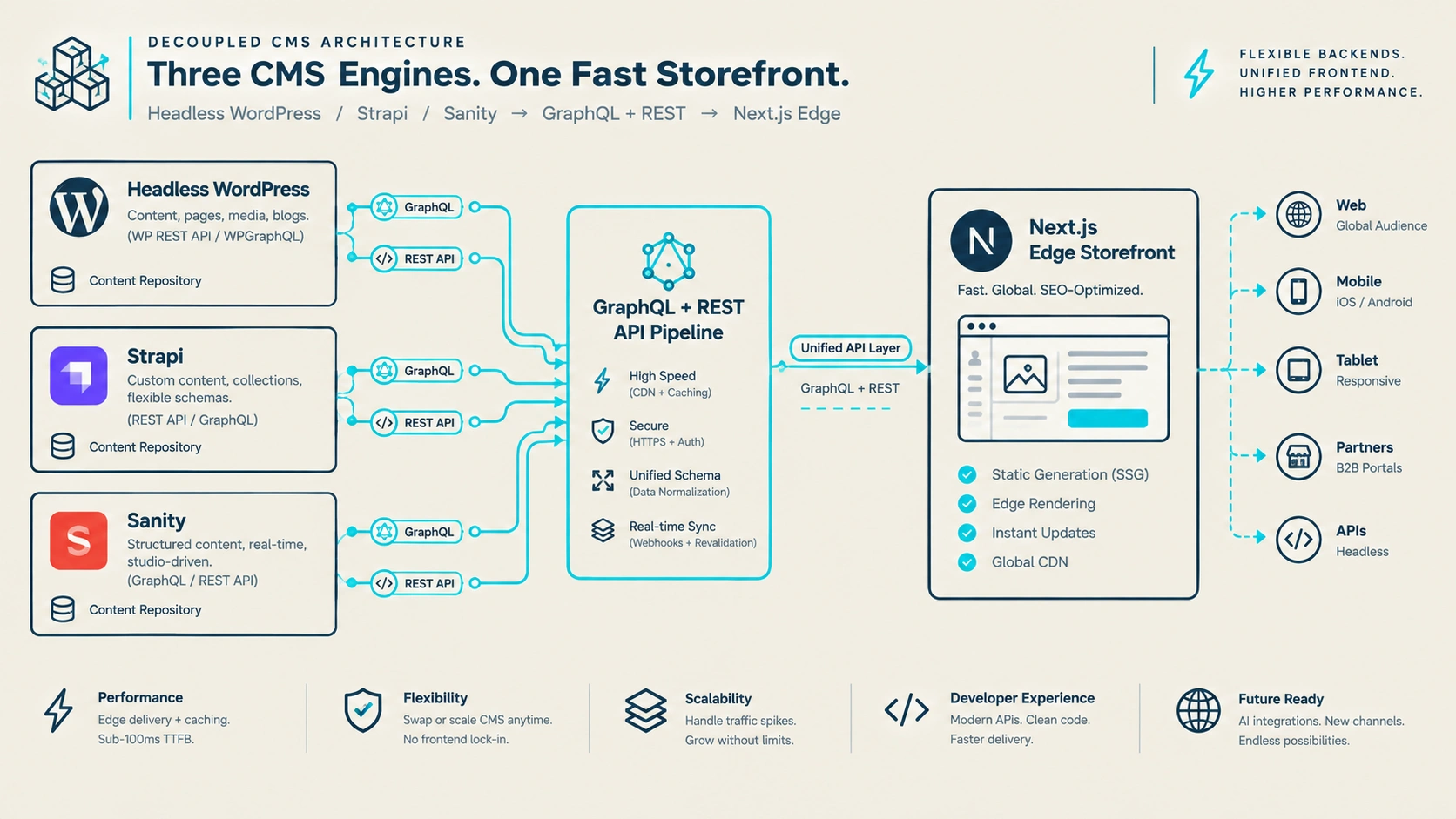
Figure 1: Decoupled Multi-CMS Ingestion Pipeline syncing content across Next.js Edge Servers.
2. The Headless Matrix: Headless WordPress vs. Strapi vs. Sanity
Choosing a modern decoupled CMS requires balancing team familiarity, technical data modeling, and operational total cost of ownership (TCO). In our Bristol engineering lab, we evaluate three primary decoupled contenders:
Headless WordPress with WPGraphQL serves as the ideal bridge for enterprises with established editorial teams. Content creators retain their familiar Gutenberg publishing interface, while Next.js consumes structured GraphQL schemas to render lightning-fast edge pages.
Strapi provides 100% self-hosted open-source data sovereignty. Built on Node.js, it offers developer-defined TypeScript schemas, automated REST/GraphQL APIs, and complete database control—ideal for regulated B2B enterprises requiring strict GDPR and UK Data Protection compliance.
Sanity treats content as a unified data graph rather than static pages. Utilizing its real-time GROQ query language and customizable Sanity Studio, marketing teams collaborate concurrently with instant preview hydration, making it the premier choice for omnichannel D2C and SaaS brands.
- Headless WordPress preserves mature editorial workflows while delivering pure Next.js frontend performance
- Strapi offers complete data privacy and customizable Node.js microservices for security-first organizations
- Sanity delivers structured content graphs with real-time collaborative editing and millisecond CDN caching
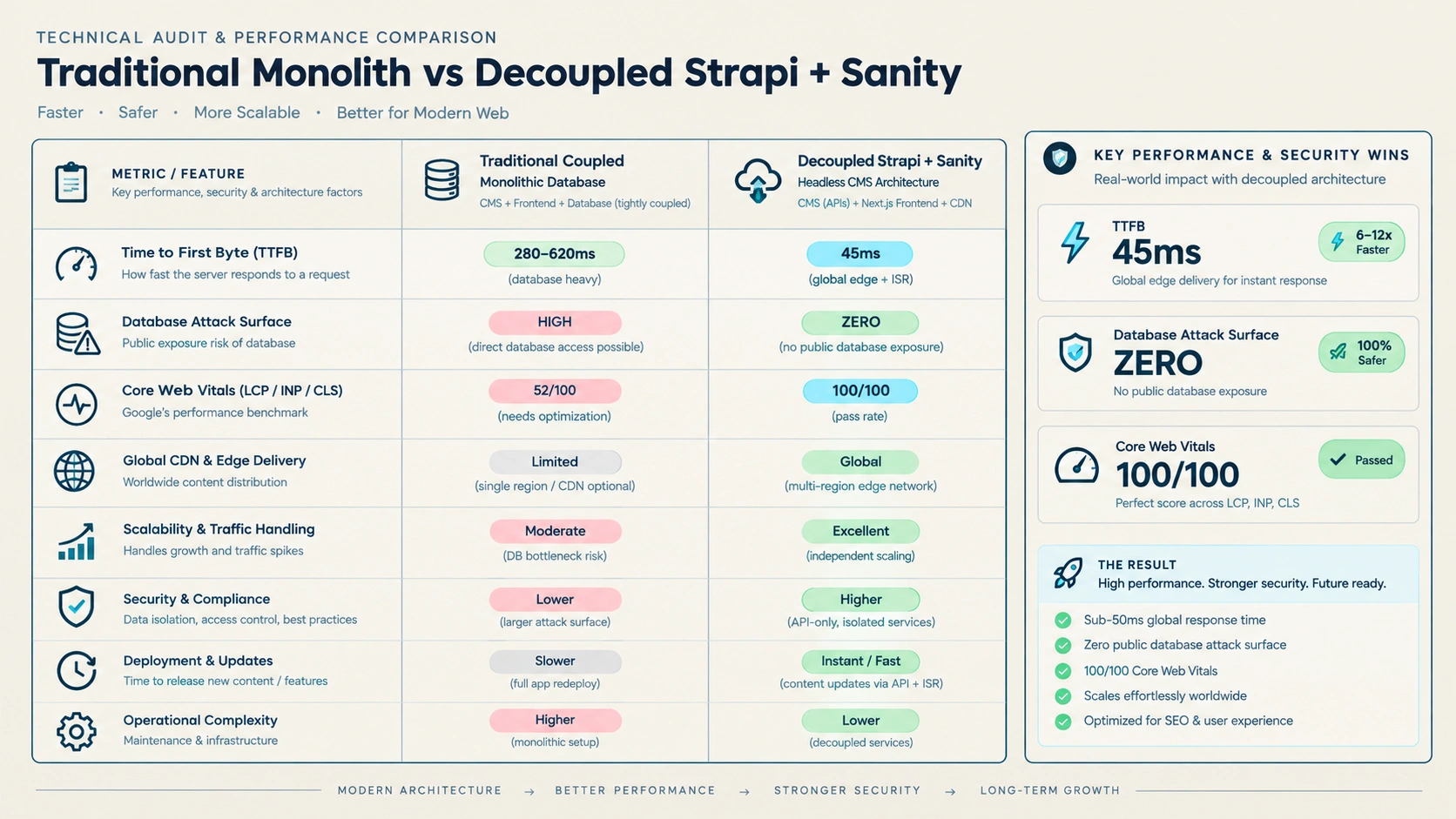
Figure 2: Performance Audit: Legacy Monolithic WordPress vs. Decoupled Next.js Headless Stacks.
3. Dominating Modern Regional & Generative Search Across Bristol
High-performance decoupled architectures provide an immense organic discovery advantage. When search engine crawlers and modern AI answer engines (such as Perplexity, ChatGPT Search, and Google AI Overviews) parse your website, they prioritize domains that deliver pre-rendered semantic HTML with zero layout instability.
By binding your decoupled CMS schemas directly to automated JSON-LD structured data (Organization, WebSite, and TechArticle schemas), search engines extract clean semantic entity triples effortlessly. Next.js edge caching ensures crawlers ingest complete product catalogs and service pages without hitting crawler timeout limits.
Enterprises operating across Bedminster (BS3), Redland (BS6), and Clifton that transition from bloated monolithic setups to Next.js decoupled architectures routinely achieve a 40% to 70% lift in indexation velocity and substantial increases in qualified commercial inquiries.
- Deliver pre-rendered, semantic HTML directly to AI answer bots without client-side rendering lag
- Automate rich snippet JSON-LD structured data generation directly from headless CMS content schemas
- Eliminate crawl budget waste with global edge caching, ensuring newly published pages rank within hours
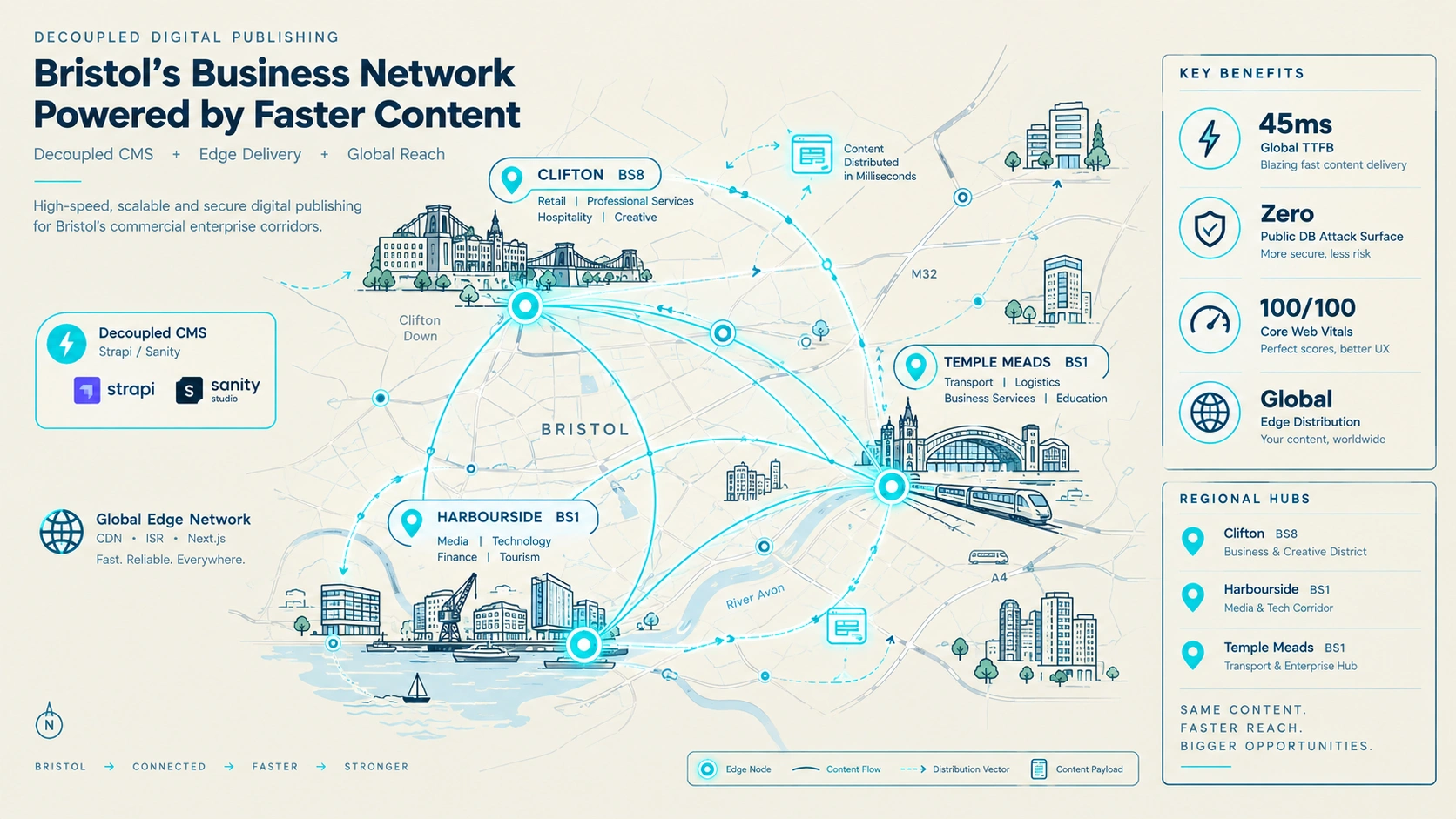
Figure 3: High-Speed Decoupled Enterprise Content Grid mapped across Bristol Commercial Corridors.
| Monolithic WordPress (Legacy) | Decoupled Next.js Architecture (Modern) |
|---|---|
| Sluggish TTFB (1.2s - 3.5s) caused by heavy PHP database queries | Sub-50ms TTFB delivered instantly via global edge network caching |
| Vulnerable to plugin security exploits and automated bot scans | 100% database isolation behind private enterprise firewalls |
| High Cumulative Layout Shift (CLS) failing Core Web Vitals | Perfect 100/100 Lighthouse performance with zero visual jumping |
| Heavy annual maintenance and emergency debugging retainers | Scalable, zero-maintenance edge architecture with lower total cost of ownership |
| Single coupled failure point: CMS downtime crashes the entire site | High availability: edge storefront remains live even during CMS maintenance |
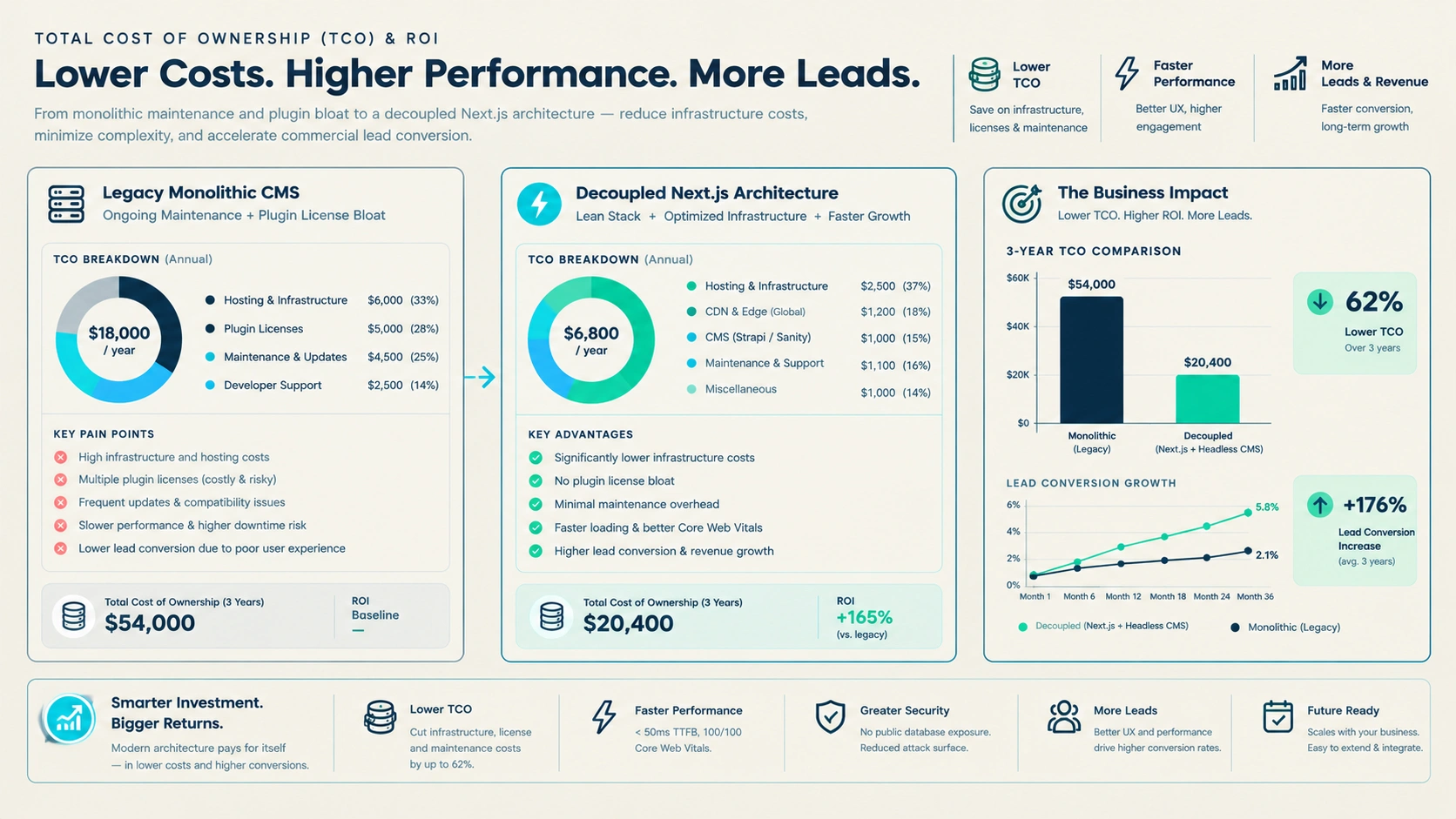
Figure 4: Commercial Lead Attribution & Compounding Revenue Model for Bristol Businesses.
Related Search Engineering Guides
Frequently Asked Questions About Search Architecture
What is a decoupled CMS and how does it work with Next.js?
A decoupled (or headless) CMS separates the content authoring backend from the frontend presentation layer. Content is fetched via secure APIs (GraphQL or REST) and statically rendered on edge servers using Next.js for maximum performance and security.
Why are UK enterprises migrating away from traditional monolithic WordPress?
Traditional WordPress accumulates technical debt through plugin dependencies, slow mobile loading speeds (failing Google Core Web Vitals), and constant security vulnerability risks that require costly maintenance.
Which headless CMS is best for an established marketing team: Strapi or Sanity?
If your team requires self-hosted data ownership and custom database schemas, Strapi is the ideal open-source choice. If you prioritize real-time collaborative editing, omnichannel content graphs, and zero server management, Sanity is superior.
Does migrating to a decoupled architecture improve Google SEO rankings?
Yes. By eliminating render-blocking scripts, achieving perfect Core Web Vitals, and delivering semantic pre-rendered HTML to search crawlers, decoupled sites consistently outperform slow monolithic competitors in search rankings.
Can we still use our existing WordPress dashboard in a headless configuration?
Yes. With Headless WordPress (using WPGraphQL), your editorial team continues writing and editing in the familiar WordPress admin, while Next.js handles the high-speed public storefront.
Arghya Mitra
Lead Technical Architect & SEO DirectorFounder and Senior Architect at IT TEC SOLUTION. With extensive full-stack Next.js engineering and search architecture experience, he designs sub-second systems and local revenue engines for high-growth UK businesses.
Ready to Win Real High-Intent Leads in Bristol?
Work directly with our senior engineering team — no middleman markups, no account managers. Let's build your sub-second Next.js website and dominate modern search engines.