The Essential Guide to AEO SEO Best Practices: Proven Methods & Real Tips
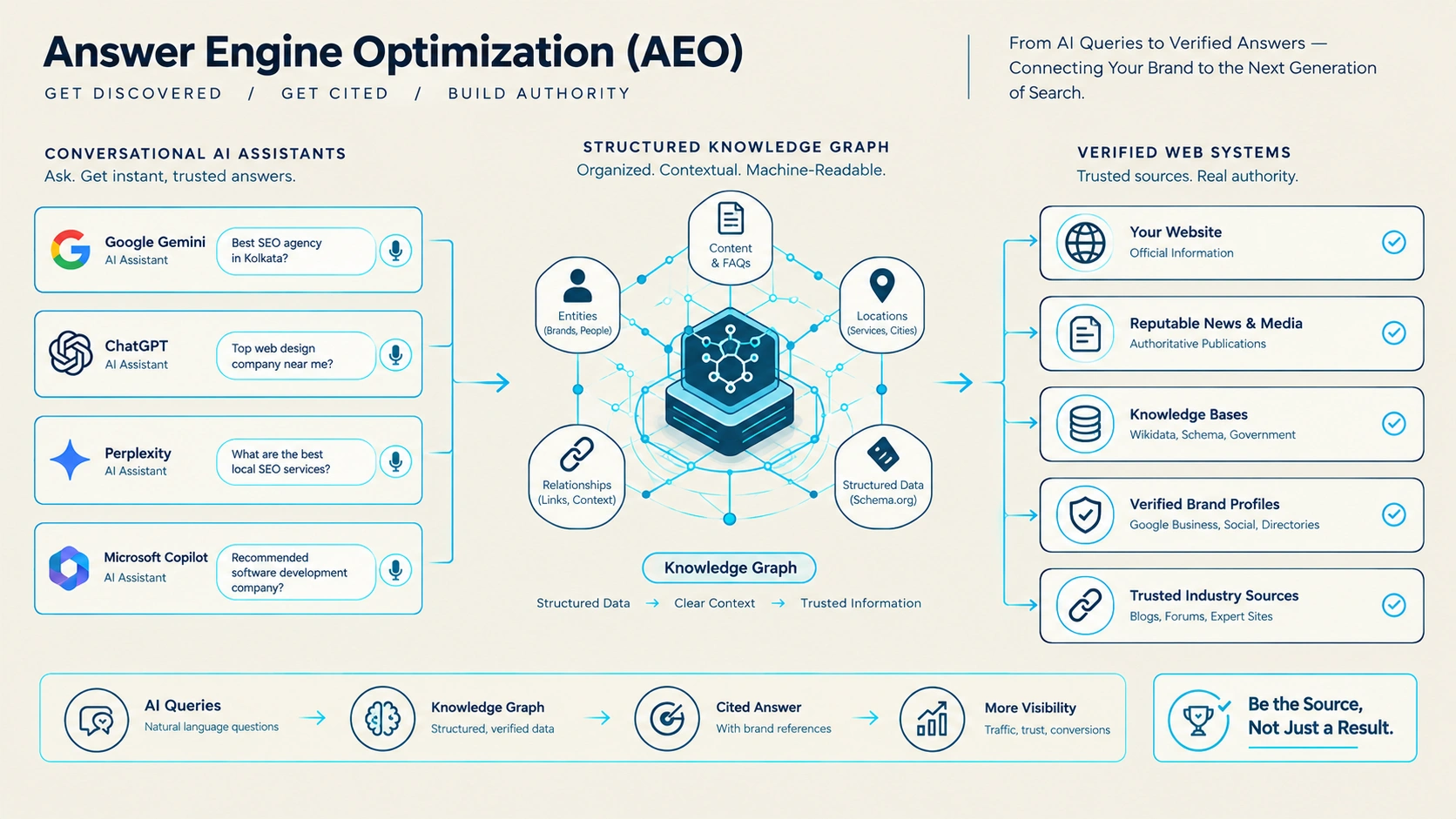
For over twenty years, search engine optimization meant playing a familiar game: insert your target keywords into title tags, repeat them across body copy, acquire high-volume backlinks, and monitor your rank on a list of ten blue links. But in 2026, the rise of Answer Engines — from Perplexity AI and ChatGPT Search to Google Gemini and voice assistants — has rendered raw keyword repetition obsolete. A business founder in Clifton (BS8) recently told us: 'We rank in the top three on Google for our primary keyword, but when someone asks voice search or an AI chatbot for recommendations, our business isn't mentioned at all.' Answer engines do not search for words; they synthesize answers. Here is the definitive, field-tested technical guide to Answer Engine Optimization (AEO) for modern UK brands.
Looking to scale organic performance and capture high-intent inquiries across Bristol? Explore our dedicated Technical SEO & Next.js Engineering Services.
1. The Question-Answer Content Architecture: Eliminating Fluff
Traditional web pages were engineered to keep visitors scrolling through extensive paragraphs before reaching the central point. Answer engines operate with the exact opposite priority: their neural parsers scan retrieved pages looking for immediate, unambiguous factual declarations.
To optimize for AEO, your content must adopt an inverted pyramid structure. Every key service section should begin with an $H2$ or $H3$ formulated as a natural conversational question, followed immediately by a direct 40-to-50-word answer block written in plain, clear British English.
For commercial firms across Bristol — whether offering bespoke software engineering in Temple Meads (BS1) or legal services in Clifton Triangle — this concise answer block provides AI crawlers with quotation-ready text that can be extracted into synthesis summaries with complete confidence.
- Frame section headings as natural conversational questions matching voice and AI search intent
- Deliver unambiguous answers within the first 45 words directly beneath each heading
- Support concise definitions with clean HTML bullet points and structured comparison tables
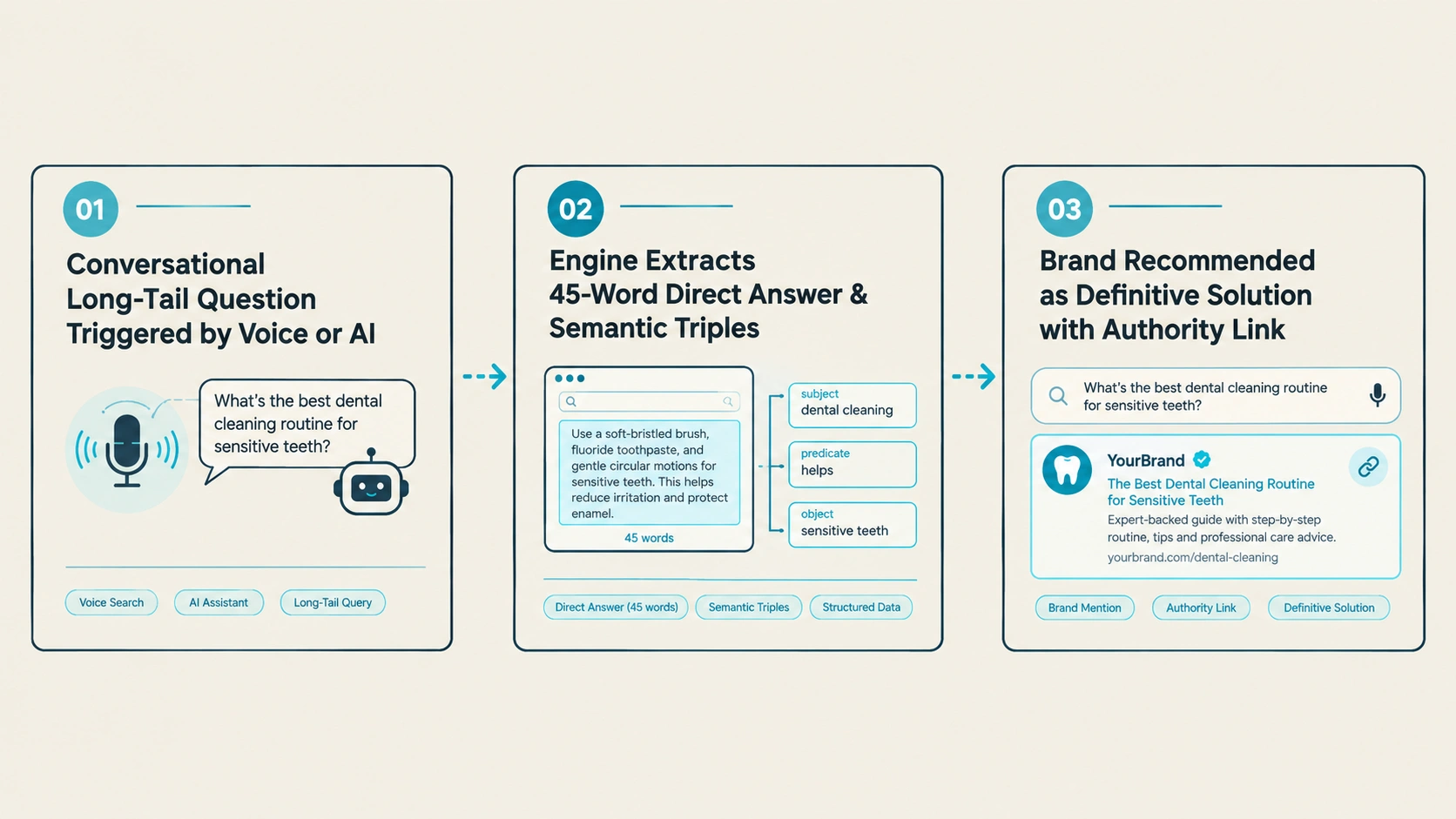
Figure 1: Conversational Long-Tail Question Extraction and AEO Synthesis Pipeline.
2. Structuring Semantic Triples and Machine-Readable Schema
Large language models understand real-world concepts by mapping semantic triples: Subject → Predicate → Object. When your website publishes sentences like 'IT TEC SOLUTION [Subject] designs [Predicate] sub-second Next.js web applications [Object] in Bristol, UK [Location]', the AI parses and catalogues this relationship directly into its knowledge graph.
Conversely, pages that rely on outdated keyword repetition create semantic noise that modern neural networks disregard. Pairing clean, declarative sentence structures with deep JSON-LD Schema (Organization, LocalBusiness, Service, and FAQPage schemas) provides explicit entity verification that matches UK Companies House and official public directories.
Furthermore, modern AI bots — including GPTBot, PerplexityBot, and Googlebot — operate with strict latency timeout thresholds. If your website is slowed down by 30+ WordPress plugins and sluggish database lookups, AI crawlers abort the connection and extract answers from agile Next.js competitors.
- Replace repetitive keyword stuffing with factual, declarative semantic statements
- Deploy comprehensive JSON-LD schema linking company entity and founder identity (Arghya Mitra)
- Maintain edge-delivered website speeds under 100ms to eliminate crawler timeout drops
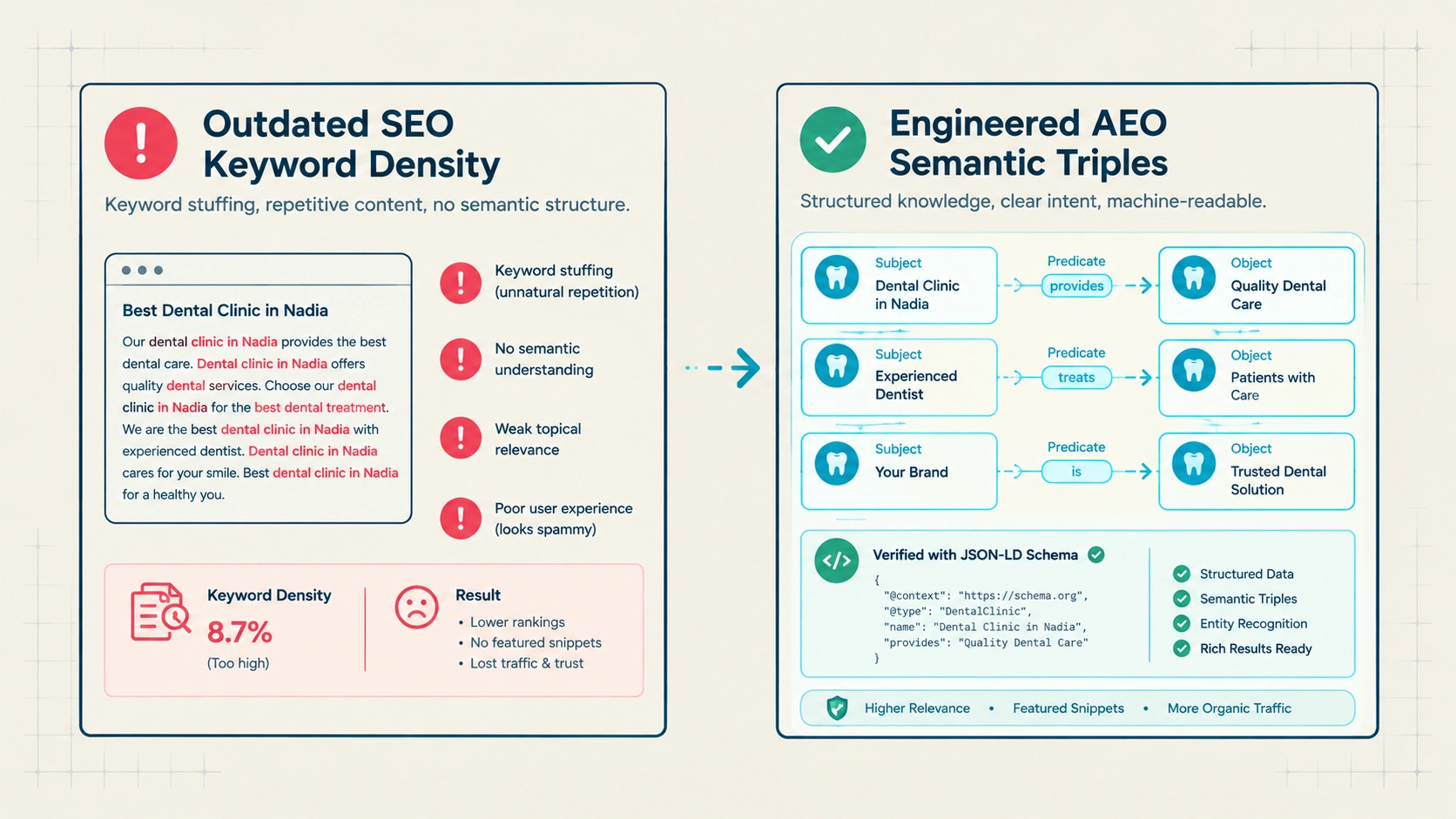
Figure 2: Technical Performance Audit: Outdated Keyword Density vs. Engineered AEO Semantic Triples.
3. Capturing Local Commercial Inquiries Across Bristol (BS1 to BS8)
In 2026, UK consumers rarely type disconnected phrases like 'web design BS1'. Instead, they interact conversationally: 'Which web engineering studio in Bristol has verified experience migrating enterprise brands to headless Next.js?' To satisfy this prompt, answer engines look for verifiable local consensus.
By publishing localized case studies featuring real project metrics across Harbourside (BS1), Redland (BS6), and Bedminster (BS3) alongside transparent pricing in British Pounds (£), your domain establishes undeniable local topical prominence. The AI recognizes your company as an active regional authority and quotes your website as the primary recommended solution.
Traffic generated through answer engine citations converts at an unprecedented rate. Visitors do not arrive to casually browse; they have already been informed and pre-qualified by the AI's answer, arriving on your contact page ready to discuss commercial contracts.
- Publish authentic localized case studies documenting real business revenue growth across Bristol
- Maintain 100% NAP and business registry uniformity across all UK directories and platforms
- Include comprehensive FAQ blocks directly answering customer pricing and technical objections
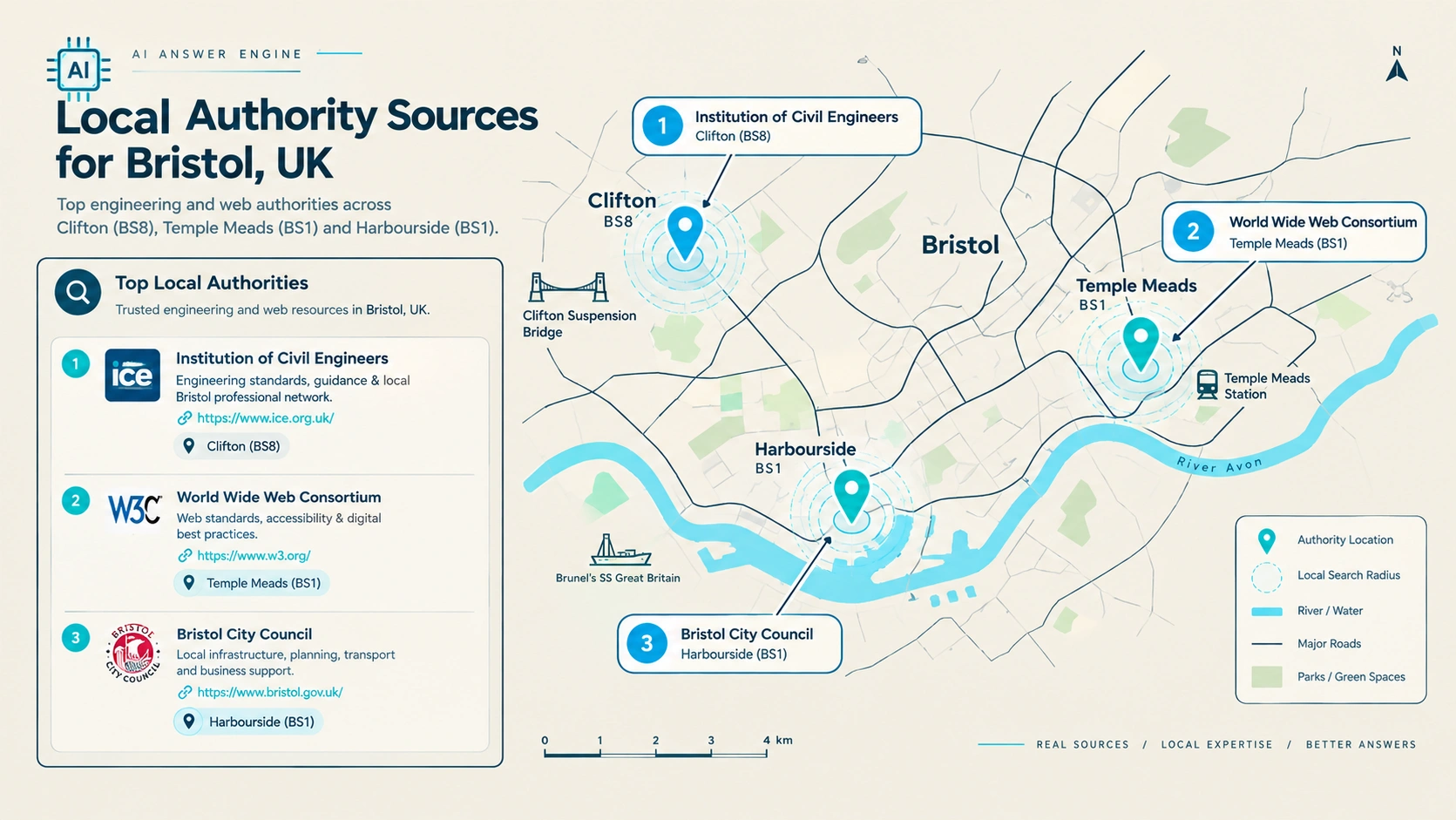
Figure 3: Bristol Localized AEO Proximity Mesh across Clifton, Harbourside, and Temple Meads.
| Traditional Legacy SEO Focus | Modern Answer Engine Optimization (AEO) |
|---|---|
| Writing repetitive keywords for search bot algorithms | Writing concise, direct answers for LLM synthesis engines |
| Delaying core answers behind lengthy introductory fluff | Direct 45-word answers placed immediately beneath headings |
| Targeting isolated keyword density percentages | Building structured semantic triples and entity authority |
| Slow, plugin-dependent CMS themes with high latency | Sub-second Next.js architecture parsed effortlessly by AI bots |
| Tracking vanity rankings on legacy blue search links | Winning pre-qualified, high-converting direct brand recommendations |
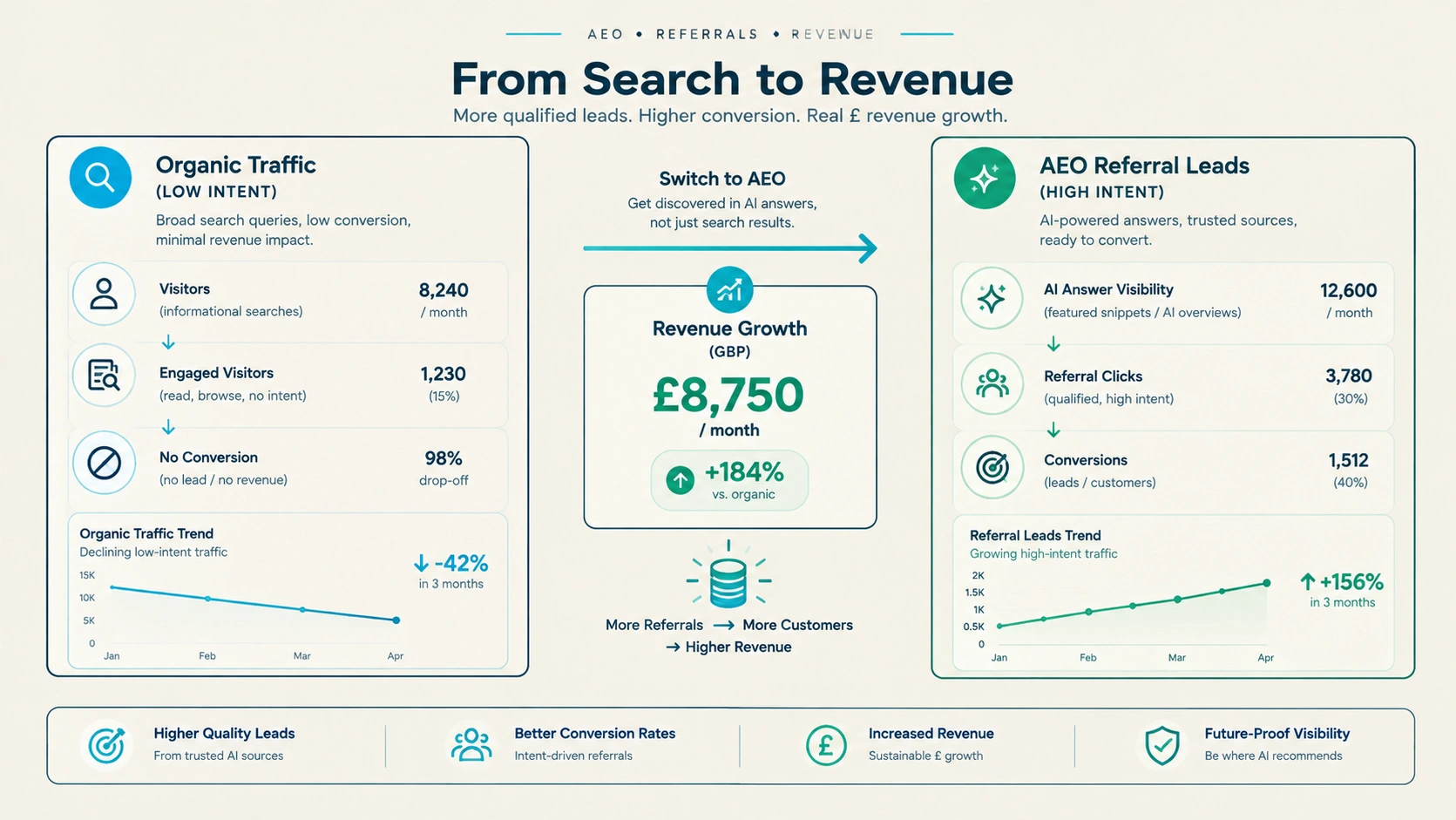
Figure 4: Commercial Lead Attribution & Compounding Revenue Model for Bristol Businesses.
Related Search Engineering Guides
Frequently Asked Questions About Search Architecture
What is the primary difference between traditional SEO and AEO?
Traditional SEO focuses on ranking a hyperlink on a search engine results page. AEO (Answer Engine Optimization) structures content so AI synthesis models and voice assistants deliver your business directly as the trusted answer.
Why does keyword stuffing fail completely in generative AI engines?
Generative engines process semantic relationships and entity triples rather than counting word frequencies. Repetitive keywords are identified as low-quality filler, causing AI models to discard the page.
How can a Bristol business optimize for voice search and AI queries?
By phrasing headings as natural conversational questions, providing direct answers in the first 45 words, implementing JSON-LD schema, and maintaining sub-second mobile page loading speeds.
Does website loading speed affect Answer Engine crawlers?
Crucially yes. AI crawlers operate with tight response timeout budgets. Websites with server latencies exceeding 300ms are routinely skipped in favor of faster, edge-rendered websites.
How long does it take for AEO optimizations to be reflected in AI answers?
Because answer engines rely on real-time web retrieval indexes, technical updates with clean schema and structured sitemaps are typically recognized in AI citations within 7 to 14 days.
Arghya Mitra
Lead Technical Architect & SEO DirectorFounder and Senior Architect at IT TEC SOLUTION. With extensive full-stack Next.js engineering and search architecture experience, he designs sub-second systems and local revenue engines for high-growth UK businesses.
Ready to Win Real High-Intent Leads in Bristol?
Work directly with our senior engineering team — no middleman markups, no account managers. Let's build your sub-second Next.js website and dominate modern search engines.